Friday, October 24, 2014

Quote Friday

Reposting this from the archives for Quote Friday. Enjoy!

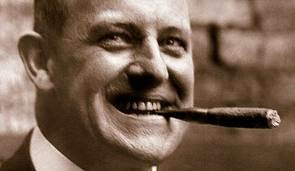
From Groucho

Groucho Marx:

"Either this man is dead or my watch has stopped."

"Outside of a dog, a book is man's best friend. Inside of a dog, it's too dark to read."

"From the moment I picked up your book until I laid it down, I was convulsed with laughter. Some day I intend to read it."

"Go, and never darken my towels again."

"I find television very educating. Every time somebody turns on the set, I go into the other room and read a book."

"I never forget a face, but in your case I'll be glad to make an exception."

"I sent the club a wire stating, PLEASE ACCEPT MY RESIGNATION. I DON'T WANT TO BELONG TO ANY CLUB THAT WILL ACCEPT ME AS A MEMBER."

"I've had a perfectly wonderful evening. But this wasn't it."

"Those are my principles, and if you don't like them... well, I have others."

"Time flies like an arrow. Fruit flies like a banana."

Margaret Dumont: "Why, that reminds me of my youth!!"
Groucho: "He must be a pretty big boy by now."

A Day at the Races:

Man: "Are you a man or a mouse?"
Groucho: "Put a piece of cheese on the floor and you'll find out."

"And stop pointing that beard at me, it might go off!"

A Night at the Opera:

Lassparri: "They threw an apple at me!"
Groucho: "Well, watermelons are out of season."

A Night in Casablanca:

"We've got to speed things up in this hotel. Chef, if a guest orders a three-minute egg, give it to him in two minutes. If he orders a two-minute egg, give it to him in one minute. If he orders a one-minute egg, give him a chicken and let him work it out for himself."

Groucho: "You know I think you're the most beautiful woman in the world?"
Woman: "Really?"
Groucho: "No, but I don't mind lying if it gets me somewhere."

Animal Crackers:

"We must remember that art is art. Well, on the other hand water is water isn't it? And east is east and west is west. And if you take cranberries and stew them like applesauce they taste much more like prunes than rubarb does."

"Do you mind if I don't smoke?"

"I'm Captain Scotland of the Spalding Yard...Captain Yard of the Scotland Spalding"

Horse Feathers:

"Members of the faculty, faculty members. Students of Huxley and Huxley's students. Well I guess that covers everything"

"Why don't you bore a hole in yourself and let the sap run out?"

"Have we got a college? Have we got a football team?....Well we can't afford both. Tomorrow we start tearing down the college."

Thursday, October 23, 2014

Way of the Ascetics

Way of the Ascetics: The Ancient Tradition of Discipline and Inner Growth by Tito Colliander


I was surprised to find that this Orthodox writer more closely resembled many of the Puritans I had read than he did the only other Orthodox book I have read, Our Thoughts Determine Our Lives by Elder Thaddeus. This is an insightful book, worth reading and digesting, but I believe advocates a way to God that is, while being necessary for some, not the best or only way. "If your eye offends you cut it out" may be what is needed to enter the kingdom for some but is not preferable or even necessary for all.
 

Wednesday, September 24, 2014

homeschooling


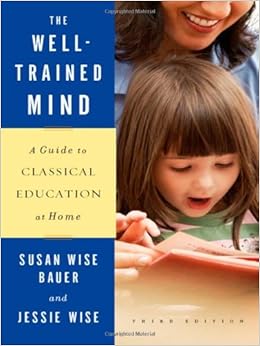
For those of you thinking about homeschooling or if you're already in the trenches, check out Susan Wise Bauer's book The Well-Trained Mind: A Guide to Classical Education at Home. It was my homeschooling bible and has been indispensable as a reference every year. (I've been homeschooling 8 years now.) It may seem like a big book, but it covers K-12th grade, so you wouldn't necessarily need to read it all right now. Her discussion of homeschooling at the beginning of the book is really encouraging and helps things not feel so muddled. Here's the website. http://www.welltrainedmind.com/


Below are some articles that I've found interesting in the subj.

Why Urban, Educated Parents Are Turning to DIY Education http://www.thedailybeast.com/newsweek/2012/01/29/why-urban-educated-parents-are-turning-to-diy-education.html


Why we homeschool http://tshoxenreider.com/why-we-homeschool/

My advice? Don't take yourself  or your plans too seriously. Have fun! Keep the big picture in mind so you don't get bogged down. Drink coffee!

And here are a couple of videos that my nerdy homeschoolers think are funny. (They like the second one better.)

Friday, September 5, 2014

Quote Friday


from Right Ho, Jeeves chapter 3:

The first of the telegrams arrived shortly after noon, and Jeeves brought it in with the before-luncheon snifter. It was from my Aunt Dahlia, operating from Market Snodsbury, a small town of sorts a mile or two along the main road as you leave her country seat.

It ran as follows:

Come at once. Travers.

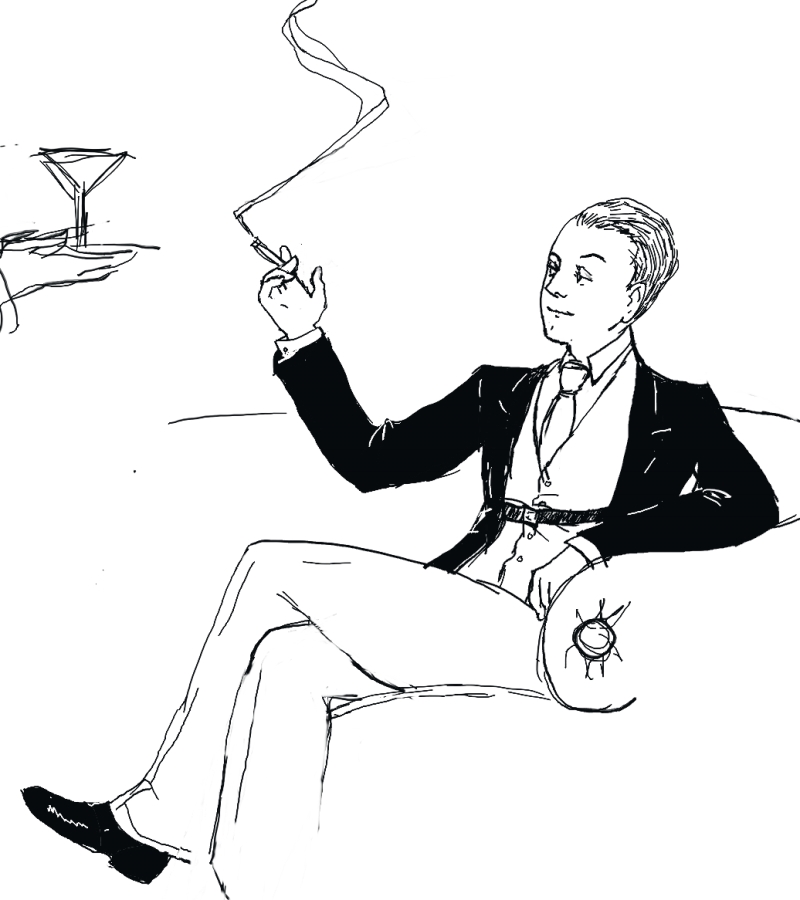
And when I say it puzzled me like the dickens, I am understating it; if anything. As mysterious a communication, I considered, as was ever flashed over the wires. I studied it in a profound reverie for the best part of two dry Martinis and a dividend. I read it backwards. I read it forwards. As a matter of fact, I have a sort of recollection of even smelling it. But it still baffled me.

Consider the facts, I mean. It was only a few hours since this aunt and I had parted, after being in constant association for nearly two months. And yet here she was--with my farewell kiss still lingering on her cheek, so to speak--pleading for another reunion. Bertram Wooster is not accustomed to this gluttonous appetite for his society. Ask anyone who knows me, and they will tell you that after two months of my company, what the normal person feels is that that will about do for the present. Indeed, I have known people who couldn't stick it out for more than a few days.

Before sitting down to the well-cooked, therefore, I sent this reply:

Perplexed. Explain. Bertie.

To this I received an answer during the after-luncheon sleep:

What on earth is there to be perplexed about, ass? Come at once. Travers.

Three cigarettes and a couple of turns about the room, and I had my response ready:

How do you mean come at once? Regards. Bertie.

I append the comeback:

I mean come at once, you maddening half-wit. What did you think I meant? Come at once or expect an aunt's curse first post tomorrow. Love. Travers.

I then dispatched the following message, wishing to get everything quite clear:

When you say "Come" do you mean "Come to Brinkley Court"? And when you say "At once" do you mean "At once"? Fogged. At a loss. All the best. Bertie.

I sent this one off on my way to the Drones, where I spent a restful afternoon throwing cards into a top-hat with some of the better element. Returning in the evening hush, I found the answer waiting for me:

Yes, yes, yes, yes, yes, yes, yes. It doesn't matter whether you understand or not. You just come at once, as I tell you, and for heaven's sake stop this back-chat. Do you think I am made of money that I can afford to send you telegrams every ten minutes. Stop being a fathead and come immediately. Love. Travers.

It was at this point that I felt the need of getting a second opinion. I pressed the bell.
"Jeeves," I said, "a V-shaped rumminess has manifested itself from the direction of Worcestershire. Read these," I said, handing him the papers in the case.

He scanned them.

"What do you make of it, Jeeves?"

"I think Mrs. Travers wishes you to come at once, sir."

"You gather that too, do you?"

"Yes, sir."

"I put the same construction on the thing. But why, Jeeves? Dash it all, she's just had nearly two months of me."

"Yes, sir."

"And many people consider the medium dose for an adult two days."

"Yes, sir. I appreciate the point you raise. Nevertheless, Mrs. Travers appears very insistent. I think it would be well to acquiesce in her wishes."

Monday, September 1, 2014

Friday, August 29, 2014

Quote Friday - Brideshead Revisited


This is a scene from Evelyn Waugh's book, Brideshead Revisited. Charles Ryder visits his friend, Sebastian Flyte, at Sebastian's home, Brideshead, during their summer break at the end of their first year at Oxford.


"One day we went down to the cellars with Wilcox and saw the empty bays which had once held a vast store of wine; one transept only was used now; there the bins were well stocked some of them with vintages fifty years old.

'There's been nothing added since his Lordship went abroad,' said Wilcox. 'A lot of the old wine wants drinking up. We ought to have laid down the eighteens and twenties. I've had several letters about it from the wine merchants, but her Ladyship says to ask Lord Brideshead, and he says to ask the lawyers. That's how we get low. There's enough here for ten years at the rate it's going, but how shall we be then?'

Wilcox welcomed our interest; we had bottles brought up from every bin, and it was during those tranquil evenings with Sebastian that I first made a serious acquaintance with wine and sowed the seed of a rich harvest which was to be my stay in many barren years. We would sit, he and I, in the Painted Parlour with three bottles open on the table and three glasses before each of us; Sebastian had found a book on wine-tasting, and we followed its instructions in detail. We warmed the glass slightly at a candle, filled it a third high, swirled the wine round, nursed it in our hands, held it to the light, breathed it, sipped it, filled our mouths with it, and rolled it over the tongue, ringing it on the palate like a coin on a counter, tilted our heads back and let it trickle down the throat. Then we talked of it and nibbled Bath Oliver biscuits, and passed on to another wine; then back to the first then on to another, until all three were in circulation and the order of the glasses got confused, and we fell out over which was which, and passed the glasses to and fro between us until there were six glasses, some of them with mixed wines in them which we had filled from the wrong bottle, till we were obliged to start again with three clean glasses each, and the bottles were empty and our praise of them wilder and more exotic.
'...It is a little, shy wine like a gazelle.'
'Like a leprechaun.'
'Dappled, in a tapestry meadow.'
'Like a flute by still water.'
'...And this is a wise old wine.'
'A prophet in a cave.'
'...And this is a necklace of pearls on a white neck.'
'Like a swan.'
'Like the last unicorn.'

And we would leave the golden candlelight of the dining-room for the starlight outside and sit on the edge of the fountain, cooling our hands in the water and listening drunkenly to its splash and gurgle over the rocks.
'Ought we to be drunk every night?' Sebastian asked one morning.
'Yes, I think so.'
'I think so too.'"

Thursday, August 28, 2014

spring & summer reading, part 2


I started reading a few passages of Elder Thaddeus' Our Thoughts Determine Our Lives (more in this post) to my children, and just had to re-read it myself. It may very well be a "read every year" book. How many "read every year" books am I allowed before I don't have room for new books? Hmmm... Where was I? Oh, yes. Our Thoughts Determine Our Lives has been such an instrumental book for me because I easily slip back into the habit of worry and this helps bring me back.


I also read The Bronze Bow by Elizabeth George Spear at my nephew's recommendation. Not my favorite book, but I can see why he (and many others) likes it.


Fit to Burst was timely for me as I was nursing my new baby. It was encouraging and succinct. I thought it was better than Jankovic's first book, Loving the Little Years (although this one's good too), mainly because it was much more applicable to everyone in all areas of life (even though it was directed at mothers). Her articles on motherhood HERE and HERE are excellent! Read them!


I love listening to books on CD while driving. Driving is boring. Books get me through. The Warden by Anthony Trollope read by Simon Vance was great, I've also read Barchester Towers and I want to read all of his books. The End.


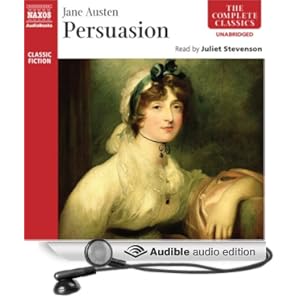
Wait, that's not the end. It can't be over without Jane Austen. Persuasion, read by Juliet Stevenson, is wonderful. Her voice and expressions bring the pages to life. I loved her portrayal of Mrs Elton in the 2009 BBC version of Emma.


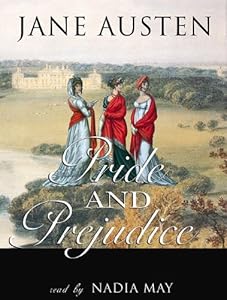
I also really like Pride and Prejudice read by Nadia May. Thank you, Sarah, (of http://frigatetoutopia.blogspot.com/) for recommending Nadia May!

Read part 1! http://thebowerofbelle.blogspot.com/2014/08/spring-summer-reading-part-1.html

Tuesday, August 26, 2014

Dark Chocolate Peanut Butter Clusters

These little gems are delish! And they're good for ya, right?!


Smucker's Dark Chocolate Peanut Butter Clusters
1/2 cup dark chocolate chips
1/4 cup Smucker's natural creamy peanut butter
1/2 cup chopped whole almonds
1/3 cup sweetened dried cranberries
1/8 teaspoon almond extract

Melt chocolate chips, stir in p.b. Stir in remaining ingredients. Divide into mini baking cups (mini muffin liners). Chill 1 hour or until firm. Sneak them out of the fridge one by one while kids are distracted.

Sunday, August 24, 2014

spring & summer reading, part 1

I titled this post, spring & summer reading, but it really should be titled something like, what to read with a new baby. This year, what with spending all my time kissing the cheeks of my precious baby (and wiping other kinds of cheeks), my reading list has been somewhat lowbrow. I'm good with that. One of the more enjoyable tasks that I've set for myself is to read my way through the works of P. G. Wodehouse, and so far this year I've read Thank You, Jeeves; Something Fishy; Jeeves and the Feudal Spirit; The Adventures of Sally; Heavy Weather; Mr Mulliner Speaking; and Right Ho, Jeeves. Can't get enough Wodehouse!

You rock, Mr Wodehouse!

While spending more time awake with my babe in the middle of the night than asleep, my eldest gave me her favorite book to read, The Mysterious Benedict Society by Trenton Lee Stewart. I was surprised and pleased at how much I enjoyed reading this book! The themes were more mature than I expected, but put in a way that wouldn't be scary or threatening to a kid. In fact, one would hope to be heroic with the help of your friends and family!

In The Motherhood and Jane Austen Book Club, I heard about Dear Mr Knightly by Katherine Reay. I don't usually go in for that sort of thing, being allergic to modernity, but thought I should try to step out of my box now and again, and I'm glad I did. It's composed of all letters, is modern with a nod to the classics, and isn't completely free of cliches or cheese, but is a very quick, fun read. (And it was fun to read with my daughter.) The book centers around Sam(antha) who spends most of her growing up years in a home that harkened back to the home for children that my parents worked in when I was young. Some of the struggles the heroine has to work through gave me a renewed respect for my mom, and the things in her past that she was able to overcome with God's help. It's clean and redemptive and you just might enjoy it. But the absolute best thing about reading this book was that it inspired me to reread The Count of Monte Cristo and Daddy Long Legs (and watch the movies).

Next up on the summer reading list, Notes From a Blue Bike by Tsh Oxenreider of The Art of Simple, was just what I needed. Her encouragement to live intentionally, choose where my time goes, and to not make unconscious excuses for not doing what I want/ need to do, was a shot in the arm. You will now find me a little more often at the farmer's market and playing in the rain with my terrific kids...and blogging? I hope!

More to come!


Wednesday, July 23, 2014

Tuesday, July 22, 2014

Andrew Pudewa talk


 Listen to this engaging talk given by Andrew Pudewa (founder & director of the Institute for Excellence in Writing) on how to inspire children to learn. Understanding how boys and girls handle stress differently, hear differently, see differently, etc. will help you if you're a parent, teacher, or come into contact with any child at any time. There are two parts, each about 45 minutes, but well worth the time. Just turn it on while canning peaches like I did, and you'll be through before you know it.

http://sloca.tapconsulting.com/site/assets/TeachingBoysPart1.mp3

http://sloca.tapconsulting.com/site/assets/TeachingBoysPart2.mp3

Monday, June 9, 2014

Tuesday, April 22, 2014

Lenten music

 
On another Easter note, I bought this CD and really loved listening to it all through Lent. Their Advent CD is really good too.

Easter desserts

Hiya Folks! Hope everyone had a blessed Easter. This Easter has been the richest of my life. Reading the Bible story to my children this year opened my eyes and my soul just a little more. I am being saved through my child-bearing, and it makes me feel excited and tingly all over. I wanted to share the recipes from our Easter lunch. Well, really just the dessert recipes because of my identifying with the children and all, I'm feeling like that was the most important part of the meal.

Here is the super delicious cake my sister made, Put the Lime in the Coconut Cake.
http://www.foodnetwork.com/recipes/put-the-lime-in-the-coconut-cake-recipe.html
These are her tips:
1. Most recipes call for waaaayyyyy too much sugar. I usually use less. The cake calls for 2 cups sugar. I used 1 1/2. The glaze calls for 1 cup sugar. I used 3/4 cup. You could probably do 1/2 cup and not be able to tell.
2. The frosting calls for 1/2 cup butter and 1/2 cup shortening. I don't use shortening much, so I used 3/4 cup butter. I used less fat than it called for because so much butter may have made the icing slide off the cake in warm weather.

3. Topping cake with white coconut gives you a pretty white cake, but for a splash of color, toast the coconut first. You can toast on a cookie sheet in the oven or on the stove top. I used the stove top method. Stir the coconut constantly over medium high heat to prevent burning. Toast until it reaches desired color. 


Make it for your next get-together. Your family will thank you.

The dessert I made, Creme Egg Brownies, appealed to me right away because of my weakness for the yearly one or two Cadbury Creme Eggs that I look forward to at Easter time.


The recipe is pretty flawless: http://themerrythought.com/recipes/creme-egg-brownies/
Make this. You will experience an instant rise in popularity. 

He is Risen!

Tuesday, September 17, 2013

Saturday, September 7, 2013

Boethius' Consolation of Philosophy


Boethius' Consolation of Philosophy has been one of those "Eureka!" books for me (along with The Sacrament of the Present Moment and Our Thoughts Determine Our Lives). This was my third reading and I know I need to read it again (thankfully it's not large!). On every page there's something that stirs the soul and delights the mind. It opens on a scene of sorrowing. Boethius has been falsely accused and imprisoned for only ever doing good. His muses are assisting him in his mourning when Lady Philosophy makes her appearance.

'Who,' she demanded, her piercing eyes alight with fire, 'has allowed these hysterical sluts to approach this sick man's bedside? They have no medicines to ease his pains, only sweetened poisons to make them worse. (p.4)

Excuse the aside here, but I think Jane Austen would heartily approve of how Lady Philosophy takes all in hand at this point. She reminds Boethius that It is hardly surprising if we are driven by the blasts of storms when our chief aim on this sea of life is to displease wicked men.(p.8) (This is one I come back to and remind myself of.) As Boethius laments his banishment, she tells him something that would be well if we all kept it in mind:

'The moment I saw your sad and tear-stained looks, they told me that you had been reduced to the misery of banishment; but unless you had told me, I would not have known how far you had been banished. However, it is not simply a case of your having been banished far from your home; you have wandered away yourself, or if you prefer to be thought of as being banished, it is you yourself that have been the instrument of it. No one else could ever have done it. For if you remember the country you came from, it is not governed by majority rule like Athens of old, but, if I may quote Homer, One is its lord and one its king; and rather than having them banished, He prefers to have a large body of subjects. Submitting to His governance and obeying His laws is freedom. You seem to have forgotten the oldest law of your community, that any man who has chosen to make his dwelling there has the sacred right never to be banished.' (p. 17)

She begins to question him so as to find the root of his problem to know the proper cure. She concludes from his answers that he has been upset by the change of Fortune, and she must point out to him that change is Fortune's normal behavior, her true nature. (p. 23) Lady Philosophy tells Boethius stop thinking of yourself as plunged in misery (p. 27) and reminds him of the good fortune he has had all of his life: the love of his adopted family, his modest wife, his successful sons, his former rank, but this, Boethius says, makes his current state even harder to bear, In all adversity of fortune, the most wretched kind is once to have been happy. (p.29) But what Boethius begins to realize is that the joys of nature are not something he owns or controls.

She contrasts Providence and Fate, and discusses whether or not there is a such thing as Chance. (102-116). She explains God's foreknowledge and man's free-will in the light of time and Eternity. (119-137). She talks about time in a way that will make your head spin like a top. The span of a single second can be compared with ten thousand years, but a minute though it may be, it still has value in proportion because each is a finite measure of time. But ten thousand years, or any multiple of it however great, cannot be compared with unending eternity. For while finite things can be compared with one another, the finite and the infinite can never be compared. (42)

Homer sings with honied tongue
How the brightly shining sun
All things views and all things hears.
And yet with rays too weak to pierce
Far within he cannot see
The bowels of earth or depths of sea.
Not so the Founder of the world
To Whose high gaze is all unfurled,
Matter's dense solidity,
And cloudy night's obsecurity.
What is, what was, what is to be,
In one swift glance His mind can see.
All things by Him alone are seen,
And Him the true sun we should deem.

Lady Philosophy speaks of the remedies as bitter [tasting] to the tongue, but grow sweet once they are absorbed. (47) She sees that Boethius is growing eager to understand the destination, which she tells him is true happiness. Your mind dreams of it, she says, but your sight is clouded by shadows of happiness and cannot see reality. (47) They discuss the different things that men commonly see as happiness: wealth, power, admiration, bodily pleasure, and Boethius conclude that True and perfect happiness is that which makes a man self-sufficient, strong, worthy of respect, glorious and joyful. (65) Lady Philosophy tells him that he must add one thing, replying, Do you think there is anything among these mortal and degenerate things which could confer such a state? (65) Her argument is logically and beautifully stated, and the gist of her conclusion several pages later is that God is the essence of happiness (70), and that when we become happy we participate in the divine. (71) They then go on to discuss goodness, and how God is the supreme good who mightily sweetens and orders all things. (80)

Whoever deeply searches out the truth
And will not be decoyed down by false by-ways,
Shall turn unto himself his inward gaze,
Shall bring his wandering thoughts in circle home
And teach his heart that what is seeks abroad
It holds in its own treasuries within.
What error's gloomy clouds have veiled before
Will then shine clearer than the sun himself.
Not all its light is banished from the mind
By body's matter which makes men forget.
That seed of truth lies hidden deep within,
And teaching fans the spark to take new life;
Why else unaided can man answer true,
Unless deep in the heart the touchwood burns?
And if the muse of Plato speaks the truth,
Man but recalls what once he knew and lost.

This light, whimsical (ha!) book then discusses what is commonly referred to as "the problem of evil". Lady Philosophy is again the voice of Wisdom, teaching that sin never goes unpunished or virtue unrewarded (86), and that Men who give up the common goal of all things that exist, thereby cease to exist themselves. (91) And that when the wicked go unpunished they acquire some extra evil in actually going scot free, which you have agreed is bad, because if its injustice. (98) Boethius sees the truth of her argument, but knows that ordinary men would not believe her. She explains that their eyes are used to dark and they cannot raise them to the shining light of truth. They are like birds whose sight is sharpened by night and blinded by day. So long as they look only at their own desires and not the order of creation, they think of freedom to commit crimes and the absence of punishment as happy things. (99)

One of my ways of thinking that was shaken and dethroned by reading Consolation is the Calvinistic belief of Total Depravity, at least the way I've always heard (and read) it presented. In contrast, she clearly states that There is nothing, therefore, which could preserve its own nature as well as go against God. (80) She recalls the story of Odysseus and his men stranded on Circe's island and Odysseus' men drinking the potion that changed them into animals where

There voice and body changed;
Only the mind remains
To mourn their monstrous plight. (95)


She contrasts the story of Odysseus and his men with

Those poisons, though, are stronger,
Which creeping deep within
Dethrone a man's true self:
They do not harm the body,
But cruelly wound the mind. (96)


Lady Philosophy argues that when a man abandons goodness and ceases to be human, being unable to rise to a divine condition, he sinks to the level of being an animal because it was by falling into wickedness that they also lost their human nature. (94) Thus, wicked people may retain the outward appearance of the human body, [but] change into animals in regard to their state of mind. (96)

Do yourself a favor and read this book as soon as possible. It's necessary.

(Consolation of Philosophy must be read in full to truly grasp and appreciate the beautiful flow of reason as this brief summary cannot substitute for that.)  

A few notes from the introduction written by Victor Watts:

King Alfred translated Consolation into Old English and Chaucer into Middle English.

Dante found Boethius one of his greatest consolations after the death of Beatrice, and set Boethius among the twelve lights in the heaven of the Sun.

Boethius speaks of philosophy as at once the pursuit of wisdom, the pursuit of divinity and the friendship of that pure mind.

Page numbers correlate to this edition.

You may also like:

The Sacrament of the Present Moment

plus potuit, quia plus amavit

"Die before you die. There's no chance after."
 
Greeneland
 

flying


During his recent visit, PopPop brought what is now my kids' favorite movie, Those Magnificent Men and Their Flying Machines. It's all the rage at my house just now, and my son goes about quoting his favorite line spoken by the Brit. It's something like, "We rule the seas, but dammit we should rule the skies too!" This is their favorite part at the very beginning. Nothing I do will convince them that you do not pronounce his name Red Skeleton. Oh well.

Friday, July 5, 2013

Quote Friday


"But you, Kristin, you should have seen so much now, methinks, that you might trust in God Almighty with a surer trust. Have you not yet understood that He bears up every soul so long as the soul lets not go its hold on Him? Think you, woman, child that you still are in your old age, that 'tis God punishing the sin, when you reap sorrow and humiliation because you followed your lusts and your own overweening pride over paths that God has forbidden His children to tread? Would you say that you had punished your children if they scalded their hands when they took up the boiling kettle you had forbidden them to touch, or if the slippery ice broke under them that you had warned them not to go upon? Have you not understood, when the brittle ice broke beneath you - that you were drawn under each time you let go God's hand, that you were saved from out of the deep each time you called upon Him?...Have you not understood yet, sister, that God has helped you each time you prayed, though you prayed half-heartedly and with feigning, and helped you much beyond what you prayed for? You loved God as you loved your father, not so hotly as you loved your own will, yet none the less so that you ever sorrowed much when you forsook Him - and therefore His mercy toward you suffered good to grow, admidst the evil harvest you must needs reap from the seed of your stubborn will."

Kristin Lavransdatter (The Cross)
by Sigrid Undset

Wednesday, June 5, 2013

May Reading

I know I'm a few days late, but here it goes....

Ten Ways to Destroy the Imagination of Your Child by Anthony Esolen
All I've ever read by Anthony Esolen (mostly articles in Touchstone Magazine) has been thought provoking and interesting. Although much of his thinking in this book was familiar to me, there were also many new things to be chewed on. Unfortunately, the people who need this book the most will never read it. sigh....


Love Among the Chickens by P. G. Wodehouse
This is one of those books that I tried to start several times, but just was too busy or reading something else to really get into it. When I did (on a plane ride), I read it straight through. It features the famous Ukridge. Not had the pleasure? Well, here's a little quote by way of introduction: I knew what manner of man Ukridge was when he relaxed and became chummy. Friendships of years' standing had failed to survive the test.


My Man Jeeves by P. G. Wodehouse
This collection of short stories features several different characters. It's a very fun smattering of Wodehouse's humour. Several of these gems are used in Jeeves & Wooster (highly recommended!).


Our Thoughts Determine Our Lives: the Life and Teachings of Elder Thaddeus of Vitovnica
It's a little daunting for me to write any kind of description of a book like this. The book is just what the title states it is, yet it is so much more. I realize that the title can even sound a bit "health and wealth" and "power of positive thinking" for Americans living in this time, but there is a true version of these things and this humble man is the one to tell you about it. Here are some of his own words to give you a better idea of the book,

Our life depends on the kind of thoughts we nurture. If our thoughts are peaceful, calm, meek, and kind, then that is what our life is like. If our attention is turned to the circumstances in which we live, we are drawn into a whirlpool of thoughts and can have neither peace nor tranquility.

It is of great significance if there is a person who truly prays in a family. Prayer attracts God's Grace and all the members of the family feel it, even those whose hearts have grown cold. Pray always.

We must bear everything patiently and forgive all. If we have good thoughts and desires, these thoughts will give us peace and joy in this life and even more so in eternity. Then we will see that there is no death, that the Lord has vanquished death, and that He has given us eternal life.

Be sure and read the introduction which tells about his life. (He lived in Serbia, through both World Wars, imprisonment by the Nazis, and the 1999 NATO bombings.)