Way of the Ascetics: The Ancient Tradition of Discipline and Inner Growth by Tito Colliander
I was surprised to find that this Orthodox writer more closely resembled
many of the Puritans I had read than he did the only other Orthodox
book I have read, Our Thoughts Determine Our Lives by Elder
Thaddeus. This is an insightful book, worth reading and digesting, but I
believe advocates a way to God that is, while being necessary for some,
not the best or only way. "If your eye offends you cut it out" may be
what is needed to enter the kingdom for some but is not preferable or
even necessary for all.
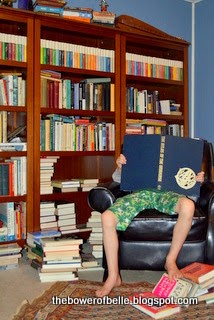
"Her Spirits were naturally good, and not easily depressed, and she possessed such a fund of vivacity and good humour as could only be damped by some very serious vexation.- Besides these antidotes against every disappointment, and consolations under them, she had another, which afforded her constant relief in all her misfortunes, and that was a fine shady Bower, the work of her own infantine Labours..." ~from Jane Austen's Catherine, or the Bower
Showing posts with label books. Show all posts
Thursday, October 23, 2014
Wednesday, September 24, 2014
homeschooling
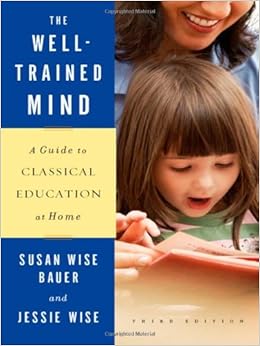
For those of you thinking about homeschooling or if you're already in the trenches, check out Susan Wise Bauer's book The Well-Trained Mind: A Guide to Classical Education at Home. It was my homeschooling bible and has been indispensable as a reference every year. (I've been homeschooling 8 years now.) It may seem like a big book, but it covers K-12th grade, so you wouldn't necessarily need to read it all right now. Her discussion of homeschooling at the beginning of the book is really encouraging and helps things not feel so muddled. Here's the website. http://www.welltrainedmind.
Below are some articles that I've found interesting in the subj.
Why Urban, Educated Parents Are Turning to DIY Education http://www.thedailybeast.com/
I want to homeschool, but don’t want the responsibility http://simplehomeschool.net/i- want-to-homeschool-but-dont- want-the-responsibility/
Why I Homeschool, and What My Approach Is http://thepioneerwoman.com/ homeschooling/2010/03/why-i- homeschool-and-what-my- approach-is/
Why We Are Homeschooling (From a Gal Who Tried Everything) http://carrotsformichaelmas. com/2012/08/15/why-we-are- homeschooling-from-a-gal-who- tried-everything/
6 homeschooling misconceptions erased http://simplehomeschool.net/ homeschooling-misconceptions/
Why I Homeschool, and What My Approach Is http://thepioneerwoman.com/
Why We Are Homeschooling (From a Gal Who Tried Everything) http://carrotsformichaelmas.
6 homeschooling misconceptions erased http://simplehomeschool.net/
Why we homeschool http://tshoxenreider.com/why-
My advice? Don't take yourself or your plans too seriously. Have fun! Keep the big picture in mind so you don't get bogged down. Drink coffee!
And here are a couple of videos that my nerdy homeschoolers think are funny. (They like the second one better.)
Friday, August 29, 2014
Quote Friday - Brideshead Revisited
This is a scene from Evelyn Waugh's book, Brideshead Revisited. Charles Ryder visits his friend, Sebastian Flyte, at Sebastian's home, Brideshead, during their summer break at the end of their first year at Oxford.
"One day we went down to the cellars with Wilcox and saw the empty bays which had once held a vast store of wine; one transept only was used now; there the bins were well stocked some of them with vintages fifty years old.
'There's been nothing added since his Lordship went abroad,' said Wilcox. 'A lot of the old wine wants drinking up. We ought to have laid down the eighteens and twenties. I've had several letters about it from the wine merchants, but her Ladyship says to ask Lord Brideshead, and he says to ask the lawyers. That's how we get low. There's enough here for ten years at the rate it's going, but how shall we be then?'
Wilcox welcomed our interest; we had bottles brought up from every bin, and it was during those tranquil evenings with Sebastian that I first made a serious acquaintance with wine and sowed the seed of a rich harvest which was to be my stay in many barren years. We would sit, he and I, in the Painted Parlour with three bottles open on the table and three glasses before each of us; Sebastian had found a book on wine-tasting, and we followed its instructions in detail. We warmed the glass slightly at a candle, filled it a third high, swirled the wine round, nursed it in our hands, held it to the light, breathed it, sipped it, filled our mouths with it, and rolled it over the tongue, ringing it on the palate like a coin on a counter, tilted our heads back and let it trickle down the throat. Then we talked of it and nibbled Bath Oliver biscuits, and passed on to another wine; then back to the first then on to another, until all three were in circulation and the order of the glasses got confused, and we fell out over which was which, and passed the glasses to and fro between us until there were six glasses, some of them with mixed wines in them which we had filled from the wrong bottle, till we were obliged to start again with three clean glasses each, and the bottles were empty and our praise of them wilder and more exotic.
'...It is a little, shy wine like a gazelle.'
'Like a leprechaun.'
'Dappled, in a tapestry meadow.'
'Like a flute by still water.'
'...And this is a wise old wine.'
'A prophet in a cave.'
'...And this is a necklace of pearls on a white neck.'
'Like a swan.'
'Like the last unicorn.'
And we would leave the golden candlelight of the dining-room for the starlight outside and sit on the edge of the fountain, cooling our hands in the water and listening drunkenly to its splash and gurgle over the rocks.
'Ought we to be drunk every night?' Sebastian asked one morning.
'Yes, I think so.'
'I think so too.'"
Thursday, August 28, 2014
spring & summer reading, part 2
I started reading a few passages of Elder Thaddeus' Our Thoughts Determine Our Lives (more in this post) to my children, and just had to re-read it myself. It may very well be a "read every year" book. How many "read every year" books am I allowed before I don't have room for new books? Hmmm... Where was I? Oh, yes. Our Thoughts Determine Our Lives has been such an instrumental book for me because I easily slip back into the habit of worry and this helps bring me back.
I also read The Bronze Bow by Elizabeth George Spear at my nephew's recommendation. Not my favorite book, but I can see why he (and many others) likes it.
Fit to Burst was timely for me as I was nursing my new baby. It was encouraging and succinct. I thought it was better than Jankovic's first book, Loving the Little Years (although this one's good too), mainly because it was much more applicable to everyone in all areas of life (even though it was directed at mothers). Her articles on motherhood HERE and HERE are excellent! Read them!
I love listening to books on CD while driving. Driving is boring. Books get me through. The Warden by Anthony Trollope read by Simon Vance was great, I've also read Barchester Towers and I want to read all of his books. The End.
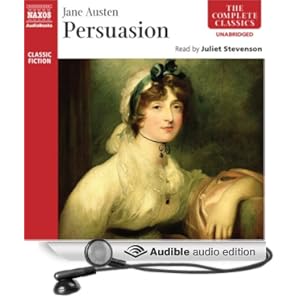
Wait, that's not the end. It can't be over without Jane Austen. Persuasion, read by Juliet Stevenson, is wonderful. Her voice and expressions bring the pages to life. I loved her portrayal of Mrs Elton in the 2009 BBC version of Emma.
I also really like Pride and Prejudice read by Nadia May. Thank you, Sarah, (of http://frigatetoutopia.blogspot.com/) for recommending Nadia May!
Read part 1! http://thebowerofbelle.blogspot.com/2014/08/spring-summer-reading-part-1.html
Sunday, August 24, 2014
spring & summer reading, part 1
I titled this post, spring & summer reading, but it really should be titled something like, what to read with a new baby. This year, what with
spending all my time kissing the cheeks of my precious baby (and wiping other kinds of cheeks), my
reading list has been somewhat lowbrow. I'm good with that. One of the
more enjoyable tasks that I've set for myself is to read my way through
the works of P. G. Wodehouse, and so far this year I've read Thank You,
Jeeves; Something Fishy; Jeeves and the Feudal Spirit; The Adventures of
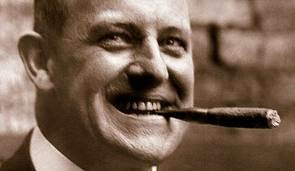
Sally; Heavy Weather; Mr Mulliner Speaking; and Right Ho, Jeeves. Can't get enough Wodehouse!
![]() |
| You rock, Mr Wodehouse! |
While spending more time awake with my babe in the middle of the night than asleep, my eldest gave me her favorite book to read, The Mysterious Benedict Society by Trenton Lee Stewart. I was surprised and pleased at how much I enjoyed reading this book! The themes were more mature than I expected, but put in a way that wouldn't be scary or threatening to a kid. In fact, one would hope to be heroic with the help of your friends and family!
In The Motherhood and Jane Austen Book Club, I heard about Dear Mr Knightly by Katherine Reay. I don't usually go in for that sort of thing, being allergic to modernity, but thought I should try to step out of my box now and again, and I'm glad I did. It's composed of all letters, is modern with a nod to the classics, and isn't completely free of cliches or cheese, but is a very quick, fun read. (And it was fun to read with my daughter.) The book centers around Sam(antha) who spends most of her growing up years in a home that harkened back to the home for children that my parents worked in when I was young. Some of the struggles the heroine has to work through gave me a renewed respect for my mom, and the things in her past that she was able to overcome with God's help. It's clean and redemptive and you just might enjoy it. But the absolute best thing about reading this book was that it inspired me to reread The Count of Monte Cristo and Daddy Long Legs (and watch the movies).
Next up on the summer reading list, Notes From a Blue Bike by Tsh Oxenreider of The Art of Simple, was just what I needed. Her encouragement to live intentionally, choose where my time goes, and to not make unconscious excuses for not doing what I want/ need to do, was a shot in the arm. You will now find me a little more often at the farmer's market and playing in the rain with my terrific kids...and blogging? I hope!
More to come!
Saturday, September 7, 2013
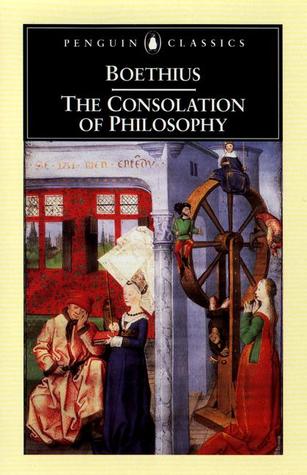
Boethius' Consolation of Philosophy
Boethius' Consolation of Philosophy has been one of those "Eureka!" books for me (along with The Sacrament of the Present Moment and Our Thoughts Determine Our Lives). This was my third reading and I know I need to read it again (thankfully it's not large!). On every page there's something that stirs the soul and delights the mind. It opens on a scene of sorrowing. Boethius has been falsely accused and imprisoned for only ever doing good. His muses are assisting him in his mourning when Lady Philosophy makes her appearance.
'Who,' she demanded, her piercing eyes alight with fire, 'has allowed these hysterical sluts to approach this sick man's bedside? They have no medicines to ease his pains, only sweetened poisons to make them worse. (p.4)
Excuse the aside here, but I think Jane Austen would heartily approve of how Lady Philosophy takes all in hand at this point. She reminds Boethius that It is hardly surprising if we are driven by the blasts of storms when our chief aim on this sea of life is to displease wicked men.(p.8) (This is one I come back to and remind myself of.) As Boethius laments his banishment, she tells him something that would be well if we all kept it in mind:
'The moment I saw your sad and tear-stained looks, they told me that you had been reduced to the misery of banishment; but unless you had told me, I would not have known how far you had been banished. However, it is not simply a case of your having been banished far from your home; you have wandered away yourself, or if you prefer to be thought of as being banished, it is you yourself that have been the instrument of it. No one else could ever have done it. For if you remember the country you came from, it is not governed by majority rule like Athens of old, but, if I may quote Homer, One is its lord and one its king; and rather than having them banished, He prefers to have a large body of subjects. Submitting to His governance and obeying His laws is freedom. You seem to have forgotten the oldest law of your community, that any man who has chosen to make his dwelling there has the sacred right never to be banished.' (p. 17)
She begins to question him so as to find the root of his problem to know the proper cure. She concludes from his answers that he has been upset by the change of Fortune, and she must point out to him that change is Fortune's normal behavior, her true nature. (p. 23) Lady Philosophy tells Boethius stop thinking of yourself as plunged in misery (p. 27) and reminds him of the good fortune he has had all of his life: the love of his adopted family, his modest wife, his successful sons, his former rank, but this, Boethius says, makes his current state even harder to bear, In all adversity of fortune, the most wretched kind is once to have been happy. (p.29) But what Boethius begins to realize is that the joys of nature are not something he owns or controls.
She contrasts Providence and Fate, and discusses whether or not there is a such thing as Chance. (102-116). She explains God's foreknowledge and man's free-will in the light of time and Eternity. (119-137). She talks about time in a way that will make your head spin like a top. The span of a single second can be compared with ten thousand years, but a minute though it may be, it still has value in proportion because each is a finite measure of time. But ten thousand years, or any multiple of it however great, cannot be compared with unending eternity. For while finite things can be compared with one another, the finite and the infinite can never be compared. (42)
Homer sings with honied tongue
How the brightly shining sun
All things views and all things hears.
And yet with rays too weak to pierce
Far within he cannot see
The bowels of earth or depths of sea.
Not so the Founder of the world
To Whose high gaze is all unfurled,
Matter's dense solidity,
And cloudy night's obsecurity.
What is, what was, what is to be,
In one swift glance His mind can see.
All things by Him alone are seen,
And Him the true sun we should deem.
Lady Philosophy speaks of the remedies as bitter [tasting] to the tongue, but grow sweet once they are absorbed. (47) She sees that Boethius is growing eager to understand the destination, which she tells him is true happiness. Your mind dreams of it, she says, but your sight is clouded by shadows of happiness and cannot see reality. (47) They discuss the different things that men commonly see as happiness: wealth, power, admiration, bodily pleasure, and Boethius conclude that True and perfect happiness is that which makes a man self-sufficient, strong, worthy of respect, glorious and joyful. (65) Lady Philosophy tells him that he must add one thing, replying, Do you think there is anything among these mortal and degenerate things which could confer such a state? (65) Her argument is logically and beautifully stated, and the gist of her conclusion several pages later is that God is the essence of happiness (70), and that when we become happy we participate in the divine. (71) They then go on to discuss goodness, and how God is the supreme good who mightily sweetens and orders all things. (80)
Whoever deeply searches out the truth
And will not be decoyed down by false by-ways,
Shall turn unto himself his inward gaze,
Shall bring his wandering thoughts in circle home
And teach his heart that what is seeks abroad
It holds in its own treasuries within.
What error's gloomy clouds have veiled before
Will then shine clearer than the sun himself.
Not all its light is banished from the mind
By body's matter which makes men forget.
That seed of truth lies hidden deep within,
And teaching fans the spark to take new life;
Why else unaided can man answer true,
Unless deep in the heart the touchwood burns?
And if the muse of Plato speaks the truth,
Man but recalls what once he knew and lost.
This light, whimsical (ha!) book then discusses what is commonly referred to as "the problem of evil". Lady Philosophy is again the voice of Wisdom, teaching that sin never goes unpunished or virtue unrewarded (86), and that Men who give up the common goal of all things that exist, thereby cease to exist themselves. (91) And that when the wicked go unpunished they acquire some extra evil in actually going scot free, which you have agreed is bad, because if its injustice. (98) Boethius sees the truth of her argument, but knows that ordinary men would not believe her. She explains that their eyes are used to dark and they cannot raise them to the shining light of truth. They are like birds whose sight is sharpened by night and blinded by day. So long as they look only at their own desires and not the order of creation, they think of freedom to commit crimes and the absence of punishment as happy things. (99)
One of my ways of thinking that was shaken and dethroned by reading Consolation is the Calvinistic belief of Total Depravity, at least the way I've always heard (and read) it presented. In contrast, she clearly states that There is nothing, therefore, which could preserve its own nature as well as go against God. (80) She recalls the story of Odysseus and his men stranded on Circe's island and Odysseus' men drinking the potion that changed them into animals where
There voice and body changed;
Only the mind remains
To mourn their monstrous plight. (95)
She contrasts the story of Odysseus and his men with
Those poisons, though, are stronger,
Which creeping deep within
Dethrone a man's true self:
They do not harm the body,
But cruelly wound the mind. (96)
Lady Philosophy argues that when a man abandons goodness and ceases to be human, being unable to rise to a divine condition, he sinks to the level of being an animal because it was by falling into wickedness that they also lost their human nature. (94) Thus, wicked people may retain the outward appearance of the human body, [but] change into animals in regard to their state of mind. (96)
Do yourself a favor and read this book as soon as possible. It's necessary.
(Consolation of Philosophy must be read in full to truly grasp and appreciate the beautiful flow of reason as this brief summary cannot substitute for that.)
A few notes from the introduction written by Victor Watts:
King Alfred translated Consolation into Old English and Chaucer into Middle English.
Dante found Boethius one of his greatest consolations after the death of Beatrice, and set Boethius among the twelve lights in the heaven of the Sun.
Boethius speaks of philosophy as at once the pursuit of wisdom, the pursuit of divinity and the friendship of that pure mind.
Page numbers correlate to this edition.
You may also like:
The Sacrament of the Present Moment
plus potuit, quia plus amavit
"Die before you die. There's no chance after."
Greeneland
Wednesday, June 5, 2013
May Reading
I know I'm a few days late, but here it goes....
Ten Ways to Destroy the Imagination of Your Child by Anthony Esolen
All I've ever read by Anthony Esolen (mostly articles in Touchstone Magazine) has been thought provoking and interesting. Although much of his thinking in this book was familiar to me, there were also many new things to be chewed on. Unfortunately, the people who need this book the most will never read it. sigh....
Love Among the Chickens by P. G. Wodehouse
This is one of those books that I tried to start several times, but just was too busy or reading something else to really get into it. When I did (on a plane ride), I read it straight through. It features the famous Ukridge. Not had the pleasure? Well, here's a little quote by way of introduction: I knew what manner of man Ukridge was when he relaxed and became chummy. Friendships of years' standing had failed to survive the test.
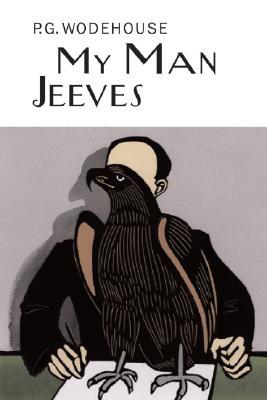
My Man Jeeves by P. G. Wodehouse
This collection of short stories features several different characters. It's a very fun smattering of Wodehouse's humour. Several of these gems are used in Jeeves & Wooster (highly recommended!).
Our Thoughts Determine Our Lives: the Life and Teachings of Elder Thaddeus of Vitovnica
It's a little daunting for me to write any kind of description of a book like this. The book is just what the title states it is, yet it is so much more. I realize that the title can even sound a bit "health and wealth" and "power of positive thinking" for Americans living in this time, but there is a true version of these things and this humble man is the one to tell you about it. Here are some of his own words to give you a better idea of the book,
Our life depends on the kind of thoughts we nurture. If our thoughts are peaceful, calm, meek, and kind, then that is what our life is like. If our attention is turned to the circumstances in which we live, we are drawn into a whirlpool of thoughts and can have neither peace nor tranquility.
It is of great significance if there is a person who truly prays in a family. Prayer attracts God's Grace and all the members of the family feel it, even those whose hearts have grown cold. Pray always.
We must bear everything patiently and forgive all. If we have good thoughts and desires, these thoughts will give us peace and joy in this life and even more so in eternity. Then we will see that there is no death, that the Lord has vanquished death, and that He has given us eternal life.
Be sure and read the introduction which tells about his life. (He lived in Serbia, through both World Wars, imprisonment by the Nazis, and the 1999 NATO bombings.)
Ten Ways to Destroy the Imagination of Your Child by Anthony Esolen
All I've ever read by Anthony Esolen (mostly articles in Touchstone Magazine) has been thought provoking and interesting. Although much of his thinking in this book was familiar to me, there were also many new things to be chewed on. Unfortunately, the people who need this book the most will never read it. sigh....
Love Among the Chickens by P. G. Wodehouse
This is one of those books that I tried to start several times, but just was too busy or reading something else to really get into it. When I did (on a plane ride), I read it straight through. It features the famous Ukridge. Not had the pleasure? Well, here's a little quote by way of introduction: I knew what manner of man Ukridge was when he relaxed and became chummy. Friendships of years' standing had failed to survive the test.
My Man Jeeves by P. G. Wodehouse
This collection of short stories features several different characters. It's a very fun smattering of Wodehouse's humour. Several of these gems are used in Jeeves & Wooster (highly recommended!).
It's a little daunting for me to write any kind of description of a book like this. The book is just what the title states it is, yet it is so much more. I realize that the title can even sound a bit "health and wealth" and "power of positive thinking" for Americans living in this time, but there is a true version of these things and this humble man is the one to tell you about it. Here are some of his own words to give you a better idea of the book,
Our life depends on the kind of thoughts we nurture. If our thoughts are peaceful, calm, meek, and kind, then that is what our life is like. If our attention is turned to the circumstances in which we live, we are drawn into a whirlpool of thoughts and can have neither peace nor tranquility.
It is of great significance if there is a person who truly prays in a family. Prayer attracts God's Grace and all the members of the family feel it, even those whose hearts have grown cold. Pray always.
We must bear everything patiently and forgive all. If we have good thoughts and desires, these thoughts will give us peace and joy in this life and even more so in eternity. Then we will see that there is no death, that the Lord has vanquished death, and that He has given us eternal life.
Be sure and read the introduction which tells about his life. (He lived in Serbia, through both World Wars, imprisonment by the Nazis, and the 1999 NATO bombings.)
Wednesday, May 1, 2013
April Reading
Boethius' Consolation of Philosophy
Read for the second time, and knew I needed to read it a third time the moment I finished. Not because it's so hard to understand, but because it is so necessary. I don't usually like introductions, but Victor Watt's introduction was helpful. (Hopefully more on this book after another reading.)
What Matters in Jane Austen? Twenty Crucial Puzzles Solved by John Mullan
The title of this book looked promising and I was not disappointed. The author knows his way around Miss Austen's novels, and pointed things out that I had missed. I enjoyed the whole book, but my two favorite chapters are, "What Do the Characters Call Each Other?" and "What Do Characters Read?"
The Luck of the Bodkins by P. G. Wodehouse
With characters named Monty Bodkin, Gertrude Butterwick, Miss Lotus Blossom, and Ikey Llewellyn how could one go wrong? Mr Wodehouse never disappoints and this was no exception. See my favorite quotes from the book HERE.
The Well-Trained Mind: A Guide to Classical Education at Home by Susan Wise Bauer and Jessie Wise
I wanted to re-read this before homeschooling next school year. It has many resources that I have found helpful.
What are you reading?
I wanted to re-read this before homeschooling next school year. It has many resources that I have found helpful.
What are you reading?
Monday, April 15, 2013
Quotes from 'The Luck of the Bodkins'
These are random quotes taken from P. G. Wodehouse's The Luck of the Bodkins.
Into the face of the young man who sat on the terrace of the Hotel Magnifique at Cannes there had crept a look of furtive shame, the shifty, hangdog look which announces that an Englishman is about to talk French. One of the things which Gertrude Butterwick had impressed upon Monty Bodkin when he left for this holiday on the Riviera was that he must be sure to practice his French, and Gertrude's word was law.
He did not like her father, considering him, indeed, a pig-headed old bohunkus, but there are times when it is politic to sink one's personal prejudices.
Ambrose Tennyson, the novelist, was there, asking the bookstall clerk if he had anything by Ambrose Tennyson.
An undertaker, passing at the moment would have looked at this young man sharply, scenting business. So would a buzzard. It would have seemed incredible to them that life still animated this limp frame. The Drones Club had given Reggie Tennyson a farewell party on the previous night, and the effects still lingered.
The place [Hollywood] is simply congested with people trying to break in. Authors especially. They starve in their thousands.They're dying off like flies all the time. This girl said that if you make a noise like a mutton chop anywhere within a radius of ten miles of Hollywood Boulevard, authors come bounding out of every nook and cranny, howling like wolves.
You can say "Oh, Reggie, for goodness' sake!" till you burst your corsets, but you won't get away from the fact that you are a foolish young pipsqueak and are making the floater of a lifetime.
He had earmarked the next hour and a half for silent communion with his tortured soul, and did not relish the prospect of having to talk to even an old friend.
In his heart, he had always hoped that the other's sciatica would not yield to treatment.
"Sounds like something out of a three-volume novel."
"She wouldn't see me. I rang her up on the telephone, and drew nothing but a butler with adenoids."
Mr Llewellyn's physique was such as to make it impossible for him, whatever the provocation, to turn like a flash, but he turned as much like a flash as was in the power of a man whose waistline had disappeared in the year 1912.
'I don't want to talk to you.'
Monty laughed like a squeaking slate pencil.
'Don't you worry. I'll do all the bally talking that's required.'
The stoutest-hearted girl is apt to quail when she finds herself confronted by the authentic cave-man.
He had a round, moon-like face, in which were set, like currents in a suet dumpling, two small brown eyes. And these eyes caused Monty, as he met them, to experience a slight diminution of the effervescing cheerfulness which he had brought with him to the room.
Besides, he felt, for the Bodkins, though amiability itself if you met them half-way, had their pride, what the hell?
He broke off, coughing. In order to give verisimilitude to his story, he had uttered the last nine words in a sardonic falsetto, and this had tried his vocal cords.
...it was her hair that caused the eye of the beholder to swivel in its socket and his breath to come in irregular pants...a vivid and soul-shattering red.
He's as jealous as billy-o. Smear a bit of burnt cork on him, and he could step right onto any stage and play Othello without rehearsal.
That things were looking a trifle glutinous, he could not deny.
Red hair and meekness are two things which seldom go together, and Lottie Blossom specialized in the former.
It beamed up at him with a wide-smiling cheerfulness which in the circumstances he found tasteless and intolerable.
Ambrose's ebullient gaiety was affecting him like some sort of skin complaint, causing him to tingle all over.
Albert Peasemarch had been resting easily against the door with one large red ear in close juxtaposition to the woodwork, absorbed in the drama within.
[On the ship] there was a long line of semi-conscious figures in chairs, swathed in rugs and looking like fish laid out on a slab, and before their glassy gaze the athletes paraded up and down, rejoicing in their virility, shouting to one another 'What a morning!' and pointing out that twice more round would make a mile.
'He's a darned ivory-domed, pig-headed son of an army mule!'
With the air of a female member of the Committee of Public Safety signing during the Reign of Terror, she did so.
She looked at him in a bewildered way, like an awakened somnambulist.
His was not an extensive vocabulary, and he found it impossible to think of anything which would really do justice to his feelings... Shakespeare might have managed it. So might Rabelais. Monty could not.
A look of anxiety came into Gertrude's shining eyes. In the dreams she had dreamed of this lovers' meeting she had not budgeted for a rigid Monty, a smileless Monty, a Monty who looked as though he had been stuffed by some good taxidermist.
For some twenty minutes he sat thus, then suddenly he shot up like a young, Hindu fakir with a sensitive skin making acquaintance with his first bed of spikes.
Had he been a Cro-Magnon Man, he would have been confined to expressing himself by means of painting paleolithic bisons on the wall of a cave, and everybody knows how unsatisfactory that is. Living in the twentieth century, he had pencils, envelopes and paper at his disposal, and he intended to make use of them.
There was a still longer interval this time, but eventually a sound of puffing heralded Albert Peasemarch's return.
Nobody who had studied the works of the poet Scott at school could fail to be aware that in such circumstances a woman's duty was clear.
His spine had begun to crawl about under his dinner-jacket like a snake.
'Step out of the frame, Mona Lisa,' said Reggie briskly. 'I want a couple of words with you.'
Mr Llewellyn left his chair and begun to strut up and down the room, satisfaction in every ripple of his chins.
Tuesday, April 9, 2013
library art
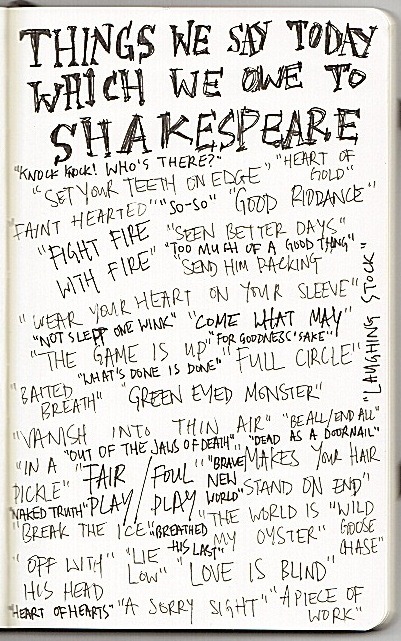
On a quest to find the perfect artwork for my children's school library (small classical school and tiny library), I came across several zingers. This one is probably my favorite because despite my best efforts I still have a crush on Shakespeare.
And isn't this just so incredibly fun?! And I think, "I could make that!...but not right now."
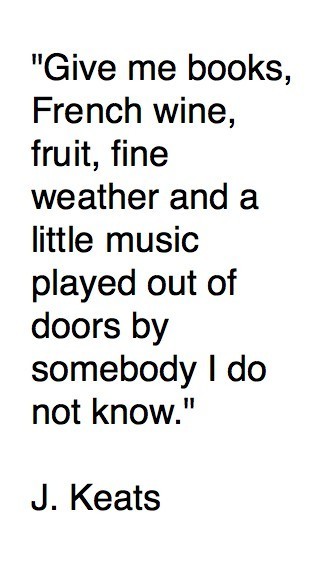
I can't amen this enough!
That John Keats was a true genius. I tell ya.
The next one brings my high school history teacher to mind because he always said it, and all that knew him knew he felt this way in his heart of hearts.
The next one is so true. Some of my very favorite people are dead. Wait...was that socially awkward?
Wish I could beat this into the young school children's heads.
But this is the one I ended up going with because it's just so fun, it's not just a quote but a colorful illustration too, it sort of reminds me of our house, and I found it for sale at a reasonable price. Unfortunately, I had to take the latter into consideration.
My thoughts exactly, Mr Lobel... well, except for the bit about the beard.
And isn't this just so incredibly fun?! And I think, "I could make that!...but not right now."
I can't amen this enough!
That John Keats was a true genius. I tell ya.
The next one brings my high school history teacher to mind because he always said it, and all that knew him knew he felt this way in his heart of hearts.
The next one is so true. Some of my very favorite people are dead. Wait...was that socially awkward?
Wish I could beat this into the young school children's heads.
But this is the one I ended up going with because it's just so fun, it's not just a quote but a colorful illustration too, it sort of reminds me of our house, and I found it for sale at a reasonable price. Unfortunately, I had to take the latter into consideration.
Books to the ceiling, Books to the sky, My pile of books is a mile high. How I love them! How I need them! I'll have a long beard by the time I read them.
~ Arnold Lobel
~ Arnold Lobel
My thoughts exactly, Mr Lobel... well, except for the bit about the beard.
Labels:
Arnold Lobel,
books,
Descartes,
Erasmus,
John Keats,
kids,
library,
movie,
quotes,
school,
Shakespeare
Sunday, January 13, 2013
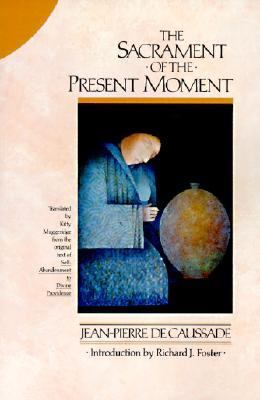
The Sacrament of the Present Moment
Book review time! This is the book you need to read to start the new year. It's very understandable, easy to read, and is about 100 pages. (I now rate the shortness of a book as a quality not to be underestimated.) The Sacrament of the Present Moment (also translated as Abandonment to Divine Providence)
written by a French Jesuit priest, Jean-Pierre de Caussade
(1675-1751), is a compilation of notes that Caussade wrote to the Nuns
of the Visitation of whom he was the spiritual director. When reading
this type of book I read slowly, trying to soak it in. There were times
when I just put the book down because my mind and heart were full and I
needed to meditate on what I'd read before going on. That's a sign of a
good book!
Along with some of my other ideas, my view of time was challenged for within the pages of this short
book we are reminded that the Scriptures are still being written, that God is working in every moment, and that we ought to have no concern but for the present moment.
To find contentment in the present moment is to relish and adore the divine will in the succession of all the things to be done and suffered which make up the duty of the present moment. p64
If what God has ordained especially for us does not satisfy us, where else shall we turn? If we do not relish what the Holy Spirit prepares for us, what food would not be tasteless to so depraved a palate? Our souls can only be truly nourished, strengthened, enriched and sanctified by the bounty of the present moment. p81
Is not all time a succession of the consequences of that divine action which pervades and fills and transfigures everything? p70
...time is but the history of divine action! p100
Caussade reminds us that we have nothing to fear, to fret over, to regret. All that is required is faith. There is a potent reminder of C.S. Lewis' Till We Have Faces in this book as Caussade discusses faith and fear, especially Lewis' Die before you die. There's no chance after.
The Love of God, submission to his divine action; that is what is necessary to sanctify souls, that is all that is required of them; and their faithfulness in responding to it is what gives them grace. p25
The more confused their situation, the better the charm works and the heart says, 'All will be well!' All is in God's hands, there is nothing to fear. Fear itself, suspense, desolation, are verses in the hymns of the night. We rejoice in not omitting a single syllable, for we know they all end in 'Glory be to God!' Thus we find our way by losing it. p95
Psyche was brought to mind as I read,
Everything in the present moment tends to draw us away from the path of love and passive obedience. It requires heroic courage and self-surrender to hold firmly to a simple faith and to keep singing the same tune confidently while grace itself seems to be singing a different one in another key, giving us the impression that we have been misled and are lost. But if only we have the courage to let the thunder, lightning and storm rage, and to walk unfaltering in the path of love and obedience to the duty and demands of the present moment, we are emulating Jesus himself. p53
Faith is the light of time, it alone recognizes truth without seeing it, touches what it cannot feel, looks upon the world as though it did not exist, sees what is not apparent. p103
Orual was also in my thoughts as the contrast between her and Psyche is so stark.
How is it that, being continually reminded that everything that happens in the world is but a shadow, an image, the mystery of faith, we persist in relying only on our human faculties, and continue to interpret the merely temporal aspect of the unanswerable enigma of our existence? p102
Lewis' story is so powerful because it reminds us of the fantastical tale that God is writing. A tale mysterious, strange, unpredictable in which we are the characters. God loves mystery, our only option is to trust Him completely. Caussade says
All are the subject of mystical tales far more beautiful and amazing than any invented by the crude imagination of mortal men... The terrifying objects put in our way are nothing. They are only summoned in order to embellish our lives with glorious adventures. p24
What perfection comes from this mysterious influence whose subject and instrument we are, and of whose existence we are not even conscious so much it does it seems to be part of what we do of our own accord!...Never knowing what is urging them on, the most divine impulses trouble them. Despising all they do, they admire what is done by others and feel themselves to be far inferior. To rely on their own efforts to overcome these apparent faults is futile, for they are God's admirable plan to force them to depend entirely on his help. p40
Follow your path without a map, not knowing the way, and all with be revealed to you. Seek only God's kingdom and his justice through love and obedience, and all will be granted to you....Remain at peace, united to God in love, and continue blindly along the straight and narrow path of duty. The angels are beside you in this dark night, their arms around you. Should God require more of you he will make it known. p57
In Jane Austen's Persuasion Anne's friend, Mrs Smith is described thus, A submissive spirit might be patient, a strong understanding would supply resolution, but here was something more, here was that elasticity of mind, that disposition to be comforted, that power of turning readily from evil to good, and of finding employment which carried her out of herself, which was from nature alone. This description has been a goal for me and Caussade's book takes the idea and expands it in an accessible way.
The first duty required of souls is self-discipline; the second is self-surrender and complete passivity; the third requires great humility, a humble and willing disposition and a readiness to follow the movement of grace which motivates everything if they simply respond willingly to all its guidance. p59
Do what you are doing, suffer what you are suffering, only your heart need be changed. It will cost you nothing, for this change only consists in desiring everything that God ordains. Yes, holiness is a will disposed to conform to God's. And what can be easier? Since who can resist adoring a will so loving and so good? This love alone makes everything divine. p61
In fact, he believes ...there is nothing easier, more ordinary, more available to all than saintliness. p6
HERE is the link to the book. If you find New Year's resolutions unattractive, then consider a "present moment" resolution to Let God's will be done; obey him in everything, each one according to his capacity. Nothing is easier in the spiritual life, nothing more available to all. p100
To find contentment in the present moment is to relish and adore the divine will in the succession of all the things to be done and suffered which make up the duty of the present moment. p64
If what God has ordained especially for us does not satisfy us, where else shall we turn? If we do not relish what the Holy Spirit prepares for us, what food would not be tasteless to so depraved a palate? Our souls can only be truly nourished, strengthened, enriched and sanctified by the bounty of the present moment. p81
Is not all time a succession of the consequences of that divine action which pervades and fills and transfigures everything? p70
...time is but the history of divine action! p100
Caussade reminds us that we have nothing to fear, to fret over, to regret. All that is required is faith. There is a potent reminder of C.S. Lewis' Till We Have Faces in this book as Caussade discusses faith and fear, especially Lewis' Die before you die. There's no chance after.
The Love of God, submission to his divine action; that is what is necessary to sanctify souls, that is all that is required of them; and their faithfulness in responding to it is what gives them grace. p25
The more confused their situation, the better the charm works and the heart says, 'All will be well!' All is in God's hands, there is nothing to fear. Fear itself, suspense, desolation, are verses in the hymns of the night. We rejoice in not omitting a single syllable, for we know they all end in 'Glory be to God!' Thus we find our way by losing it. p95
Psyche was brought to mind as I read,
Everything in the present moment tends to draw us away from the path of love and passive obedience. It requires heroic courage and self-surrender to hold firmly to a simple faith and to keep singing the same tune confidently while grace itself seems to be singing a different one in another key, giving us the impression that we have been misled and are lost. But if only we have the courage to let the thunder, lightning and storm rage, and to walk unfaltering in the path of love and obedience to the duty and demands of the present moment, we are emulating Jesus himself. p53
Faith is the light of time, it alone recognizes truth without seeing it, touches what it cannot feel, looks upon the world as though it did not exist, sees what is not apparent. p103
Orual was also in my thoughts as the contrast between her and Psyche is so stark.
How is it that, being continually reminded that everything that happens in the world is but a shadow, an image, the mystery of faith, we persist in relying only on our human faculties, and continue to interpret the merely temporal aspect of the unanswerable enigma of our existence? p102
Lewis' story is so powerful because it reminds us of the fantastical tale that God is writing. A tale mysterious, strange, unpredictable in which we are the characters. God loves mystery, our only option is to trust Him completely. Caussade says
All are the subject of mystical tales far more beautiful and amazing than any invented by the crude imagination of mortal men... The terrifying objects put in our way are nothing. They are only summoned in order to embellish our lives with glorious adventures. p24
What perfection comes from this mysterious influence whose subject and instrument we are, and of whose existence we are not even conscious so much it does it seems to be part of what we do of our own accord!...Never knowing what is urging them on, the most divine impulses trouble them. Despising all they do, they admire what is done by others and feel themselves to be far inferior. To rely on their own efforts to overcome these apparent faults is futile, for they are God's admirable plan to force them to depend entirely on his help. p40
Follow your path without a map, not knowing the way, and all with be revealed to you. Seek only God's kingdom and his justice through love and obedience, and all will be granted to you....Remain at peace, united to God in love, and continue blindly along the straight and narrow path of duty. The angels are beside you in this dark night, their arms around you. Should God require more of you he will make it known. p57
In Jane Austen's Persuasion Anne's friend, Mrs Smith is described thus, A submissive spirit might be patient, a strong understanding would supply resolution, but here was something more, here was that elasticity of mind, that disposition to be comforted, that power of turning readily from evil to good, and of finding employment which carried her out of herself, which was from nature alone. This description has been a goal for me and Caussade's book takes the idea and expands it in an accessible way.
The first duty required of souls is self-discipline; the second is self-surrender and complete passivity; the third requires great humility, a humble and willing disposition and a readiness to follow the movement of grace which motivates everything if they simply respond willingly to all its guidance. p59
Do what you are doing, suffer what you are suffering, only your heart need be changed. It will cost you nothing, for this change only consists in desiring everything that God ordains. Yes, holiness is a will disposed to conform to God's. And what can be easier? Since who can resist adoring a will so loving and so good? This love alone makes everything divine. p61
In fact, he believes ...there is nothing easier, more ordinary, more available to all than saintliness. p6
HERE is the link to the book. If you find New Year's resolutions unattractive, then consider a "present moment" resolution to Let God's will be done; obey him in everything, each one according to his capacity. Nothing is easier in the spiritual life, nothing more available to all. p100
Friday, September 14, 2012
Disciplines of a Godly Woman by Barbara Hughes
Initial thoughts on the book:
"This would probably be be a good book for my 10 year old daughter. . . although I would have to explain the moralism."
"This reminds me of that parenting book we read, Light Their Fire for God, because of all of the 'This is Carol's story...' and 'Once we knew a lady named Stacy...' and 'Roberta wasn't ready for Jesus, but then we...' but also because of the comforting and applicable scripture references; I like that part."
"This might be a good book for a new Christian."
"Stop being so proud, you need this too!"
"I know. But really!?!? I'm gettin' 'bla bla bla'."
"Pride!"
One thing I've noticed about myself is that the books I consider good books are ones that I want to underline and otherwise mark up, are quotable, and re-readable. This book was none of these. That's not to say that it's not a good book though. It certainly isn't a bad book, just as soggy oatmeal isn't a bad breakfast, but when you're waiting for your breakfast in bed at at a French hotel and this is what's brought to you - well, it's a let-down.
This is the type of book that I most abhor for a book club or discussion: There is nothing to really discuss, nothing for anyone to disagree with (myself excepted), but is precisely the type that is chosen over and over for just such a discussion. Written by a kindly grandmother for a mass audience in a modern church and chalked full of platitudes and moral principles that would make Ben Franklin proud, this book quotes all of the "right" people: Augustine, Packer, Lloyd-Jones, etc. I have no doubt that I would enjoy a conversation with Mrs Hughes and could learn a lot from this lady's sterling character, but her book (any book) cannot depend solely on that; it must stand on it's own. Mrs Hughes is a pastor's wife and naturally her book places a strong emphasis on the tithe, church attendance, and praying over the church prayer list. I find it oddly humorous that she chose 1 Corinthians 16:2 (On the first of the week let each one of you lay something aside, storing up as he may prosper, that there be no collections when I come.) to argue for the collecting of the tithe - humored, but not surprised. The favorite few are always brought forward to argue for how we do it now. She also quotes Hebrews 10:25 (Do not forsake assembling together...) to prove, absolutely prove with out a doubt, that your rear is to be on a pew from 10-12am every Sunday morning while other verses, that may suggest otherwise, are never touched on.
I do appreciate her many scripture references and have written some down to revisit, but if that was what I wanted my time would be better employed with a concordance. Don't get me wrong: I question myself. I question myself even as I have these thoughts. But I also question them - the modern Reformed folk who can't get past square uno. At least Tim Keller's Prodigal God makes you think! He almost had something there! (Might I recommend The Life of God in the Soul of Man by Henry Scougal?)
Books such as this, written for church women, just deflate me. Alice von Hildebrand pulls it off, Barbara Hughes does not. I'm sorry. I remember one Beth Moore study we did in Sunday school - all of the women were chatting about how encouraged they were. Me? It depressed me, and so does this book. It's soggy oatmeal when I long for a real French breakfast.
It all puts me in mind of Mr Woodhouse who loves his "small basin of thin gruel" and is all that he "with thorough self-approbation" can recommend. It's as if this group is scared. Of what I do not know, but just read the blog comments on such a blog (Reformed, esp. the ones for women) and it's obvious that unless someone comments "Great post!! Thank you!!! Just what I needed today!!!! I am in tears!!!!!" and has no original thought in their head they are frowned upon. (Not that this is done by the authors of the blog per se but is frequently done by others who claim this vestment.) We're, in effect, told (as Mrs Bates was told) "Let me propose you venturing on one of these eggs. An egg boiled very soft is not unwholesome. (Fill in here the name of the approved Reformed, Calvinistic thinker, writer, pastor of today) understands boiling an egg better than anybody. I would not recommend an egg boiled by anybody else - but you need not be afraid, they are very small, you see - one of our small eggs will not hurt you." I'm left feeling like Emma, who, "though delighted to see everyone looking so comfortable", "the quiet prosings of such women made her feel that every evening so spent was indeed one of the evenings she had fearfully anticipated".
Labels:
Alice von Hildebrand,
Barbara Hughes,
book club,
books,
Corinthians,
Disciplines of a Godly Woman,
Emma,
Hebrews,
Henry Scougal,
Life of God in the Soul of Man,
Mr Woodhouse,
oatmeal,
women
Tuesday, February 14, 2012
Ann Voskamp's 'One Thousand Gifts' - a review, of sorts
My sisters and I wanted to read a book together, but since half of us live in the North West and half of us live in the South, we used a Google document to keep the conversation going. Of the sisters, R writes in purple, B writes in blue, L writes in green, and E writes in red. The book that was chosen was Ann Voskamp's One Thousand Gifts, and here is the conversation that my sisters had no idea I was going to put on the blog. Do you dare read the full thing? It is lengthy, I'll admit...
7/3/11 - So BOOK CLUB!!!! I’m assuming everyone has their book now so we can begin. My thoughts are to start this Google document, and everyone can write their thoughts as we read through it. You can catch up on reading what everyone else wrote when you post your own thoughts.
You are supposed to write down 1,000 gifts before it’s all over with. I thought using the journals mom gave us would be nice - carry it around with you and write as things strike you. Write thoughts about reading here (does not need to be a tome) and post SOME of your 1000 gifts - maybe the best or most interesting ones.
7/7/11 - Chapter One
I could have written this book if I had the talent so a lot of my thoughts from the first chapter reflect the author’s. The author has a candid honesty about struggles in her life and has found the right answers. She talks about keeping the body moving to keep the soul from atrophying. Busyness keeps us from focusing on the hard things, things we don’t want to confront. “How do I fully live when life is full of hurt?” “No, God, we won’t take what you give.” There are things I don’t have to say. "Like all beliefs, you simply live them." Why does God not give me what I want, need, the desires of my heart? Why is my life not always happy? He has a secret purpose to fill me with glory. He is making me into His image. Since the fall, our sin has been ingratitude with what God gives. I do not give thanks in ALL things. I wonder why I should give thanks for things that don’t make me happy, things I think need to change. It is a choice to open our hands to freely receive whatever God gives. The choice to not only take His grace offered at the cross, but also to live life filling with His grace everyday. Grace in the hard things.God’s grace is a mystery. I don’t know why things happen, but do I have to? “Maybe you don’t want to change the story, because you don’t know what a different ending holds.” Like the author, I have found myself groping along, famished for more, and I have refused to let the mysteries nourish me. The holes in our life can become places to see, see through to God. “How do I give up resentment for gratitude, gnawing anger for spilling joy? Self-focus for God-communion?”
7/9/11 - Chapter Two
p. 32 - Eucharisteo - he gave thanks - comes from the root word Charis meaning grace. Charis - a gift for which I give thanks. The author doesn’t start listing gifts until Chapter 3, but I’ve read part of this book before so in Chapter 2, I’ll list my first gift.
1. Sisters
7/9/11 - pp 9-41
At the top of page 15 when she says, 'Doesn't God want me to be happy?', she hits the nail on the head because I think this is a common misconception. Now, Joy can be yours, but the sooner we stop trying to make ourselves happy the better- only then can we seek God's Joy.
She has so much fear and there's nothing she can do with it. One must give it to God, it's the only way to live. This book can only get more cheerful; it's started out so mournful.
Struck w/ the thought that B. will cringe at all the sentence fragments in the book.
Was thinking that I didn’t understand these poetic types writin’! :-)
So she touches on the joy concept... (Questioning whether I do nonfiction....except of course Boethius, and for someone more modern, perhaps Sarah Baxter Emsley. Thinking I need to get R and her kids back on fiction.) Perhaps I will try the style of the author:
Today.
I wake.
Am tired.
Pot of coffee.
And another.
And another.
Full bladder.
This is how I would try to write after 3 beers. (That is a joke, btw.:)) I like what she writes at very top of page 39, that the whole life is possible when we are thankful. Thinks she must have hidden depths to be quoting Schmemann. Page 40 is also a gem.
I should never try to write a book review.
7/13/11 - pp. 36-54
Jesus gives thanks the night He was betrayed. I’ve been pondering what to give thanks for. I don’t think you have to give thanks for bad things or evil in the world. Hitting closer to home, I’m not thankful for mom’s death. I am thankful for things related to her death (lessons learned, opportunities to share gospel with others, love from family). Should I be thankful for something “bad”? Can I have an attitude of thanksgiving without being thankful for every detail?
p. 37 - I like the analogy of the wheat dying and rising again in the loaf of communion bread.
One habit must be replaced by another habit. It’s not good enough to just will to stop being discontent. You must cultivate thankfulness to drive it out. Turning our focus to the good, pure, beautiful...gifts I’m thankful for...
2. hot showers
3. deep sleep on a comfy bed
4. long talks with friends
5. Coffee - need I say more?...
6. ...Yes, I do - Chocolate :-)
I like your poetry? haiku? How’s the ol’ bladder today? Bring on the beer...
Chapter 1&2 (pages 1-41)
First of all, thank you R for the book, the idea, and the opportunity. I love this during the summer and at this season in my life. Tonight (Wed.) I heard the testimony of Linda. The end was where she is now and what God is teaching her with her daughter having a stage 4 cancer diagnosis. She said 3 things she has learned, 1. to thank Him, 2. to trust, and 3. to praise. My small study group after the main group includes Linda and her daughter and it has been such a blessing for me these past few weeks. They are a living example of what this book is teaching. Now to the book...The middle of page 12 says, “We live with our hands clenched tight.” I’ve always liked the analogy of clenched fists being unable to receive (or see) God’s blessings. The bottom of page 13 says, “Like all beliefs, you simply live them.” What a great reminder. My view of God, of my circumstances, of my reaction to hardships and trials will be evident in how I live my life. Do I want it to be one of clenched fists or one of thankfulness, trust, and praise?
Page 14 - “That forked tongue darts and daily I live the doubt.” and page 15 talks about the sin of ingratitude. It’s so easy to look and think about what we don’t have rather than give thanks for what we do have. I do want an easy life, but I have one of the most blessed lives on earth! Instead of letting my blood pressure get awry when yet another piece of the interior of my van falls off, down, or stops working, I can thank God that I do have a vehicle to drive and that it has A/C in 103 degree weather! The list goes on. I cast sidelong glances when things aren’t easy for me.
Trust - page 17, 1 Cor. 2:7. His purpose in all that takes place in our lives is to mold us, shape us, bring us to our full glory, even the hardest trials. Amazing. Us writing the story would be a disaster (p. 21). We don’t know His purpose but we do have His promise, so we can fully trust His plan.
Seeing God - page 22 When our souls are torn open, we can react in such a way that opens our sight of God, of His heart-aching beauty and grow. We can wither and close our eyes or grow seeing God clearer than ever.
How do we live fully so we are fully ready to die? (p.29) See the wonder all around us. (Reminded me of Nate’s Tilt-a-Whirl book and DVD which I loved R,Thank you!) The goal is JOY (p. 32). Give thanks in everything. “Eucharisteo-thanksgiving- always precedes the miracle.” Thanksgiving allows us to see. (Ps.50:23 - page 39.) Seeing leads to living fully so that we are fully ready to die.
Wednesday, March 9, 2011
The Supper of the Lamb
The Supper of the Lamb is the most unique cookbook I have ever read. (You will see the significance of the onion photo after the first chapter.) You know, I wouldn't even call it a cookbook per se, rather a philosophy of food and of life. A man can do worse than be poor. He can miss altogether the sight of the greatness of small things.(25) And, Nourishment is necessary only for a while; what we shall need forever is taste.(40)
There are indeed recipes at the back and throughout the book, but The Supper of the Lamb (written by a priest, Robert Farrar Capon) is much more encompassing than recipes. He delves into being a pathological calorie counter. His body may or may not lose weight; his soul, however, is sure to wither.(112) He discusses types of knives. A woman with a cleaver in mid-swing is no mere woman...A man who has seen women only as gentle arrangers of flowers has not seen all that women have to offer. Unsuspecting majesties await him.(61). The wonders of garlic, commercial stoves, and the many salvific attributes of baking soda. One of them being a Bestower of peaceful sleep after four beers, two heroes, and a sausage pizza...(186)
He freely discusses the views of wine. Each thing, at every moment, becomes the delight of His (God's) hand, the apple of His eye. The bloom of yeast lies upon the grapeskins year after year because He likes it...every September, He says, That was nice; do it again.
Let us pause and drink to that.(85)
My flesh creeps when I hear the legitimate love of the fruit of the vine treated as if it were a longer-winded way of doing what the world does with grain neutral spirits and cheap vermouth...God gave us wine to make us gracious and keep us sane.(91)
He states that we should feed children but not cook for them (i.e. cook to their tastes). No matter what they think, we know: We are the ones who have tasted and seen how gracious it all is.(131) And he even goes into kitchen cleanliness. Woks and iron skillets should be rinsed and wiped, never washed. If someone comes along and tells you cleanliness is next to godliness the proper answer is, "Yes- next. Right now I'm working on godliness."(142)...A sense of proportion is a saving grace.(143) And even differing methods of cooking, peeling or scrubbing is merely high church(30).
My favorite chapter, though, is on entertaining when he gets wound up about the cocktail party. A zealous host and hostess "may work themselves into a fit of omnipresence."(168) But, I find hard liquor and goodies from 5 to 8 p.m. to be inhuman, unmerciful, and frustrating.(168) Saying that the dinner party on the other hand is, an honest attempt to create a company, not a crowd.(170)
He speaks truth, my friend. A piece of cheese, a bottle of beer, and a twenty-minute nap would solve more of the problems of industry, politics, and the church, than all the pretentious martini-logged luncheon meetings in the world.(147)
Let me just leave you with, May you drink well enough to drown the envy of youth in the satisfaction of maturity.(180)
And remember, We were given appetites, not to consume the world and forget it, but to taste its goodness and hunger to make it great.(189)
(The book on the right is the copy I have, and where I stole all of these great quotes.)
Thursday, July 22, 2010
kids' books
I thought this article was really interesting on books for kids. Check it out. (This magazine puts out some good stuff.) http://www.touchstonemag.com/archives/article.php?id=22-06-022-f
Subscribe to:
Posts (Atom)