Showing posts with label Jane Austen. Show all posts

Thursday, August 28, 2014

spring & summer reading, part 2


I started reading a few passages of Elder Thaddeus' Our Thoughts Determine Our Lives (more in this post) to my children, and just had to re-read it myself. It may very well be a "read every year" book. How many "read every year" books am I allowed before I don't have room for new books? Hmmm... Where was I? Oh, yes. Our Thoughts Determine Our Lives has been such an instrumental book for me because I easily slip back into the habit of worry and this helps bring me back.


I also read The Bronze Bow by Elizabeth George Spear at my nephew's recommendation. Not my favorite book, but I can see why he (and many others) likes it.


Fit to Burst was timely for me as I was nursing my new baby. It was encouraging and succinct. I thought it was better than Jankovic's first book, Loving the Little Years (although this one's good too), mainly because it was much more applicable to everyone in all areas of life (even though it was directed at mothers). Her articles on motherhood HERE and HERE are excellent! Read them!


I love listening to books on CD while driving. Driving is boring. Books get me through. The Warden by Anthony Trollope read by Simon Vance was great, I've also read Barchester Towers and I want to read all of his books. The End.


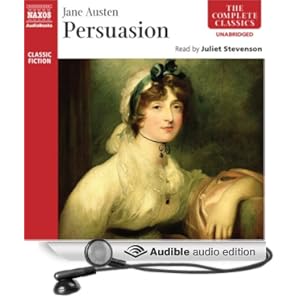
Wait, that's not the end. It can't be over without Jane Austen. Persuasion, read by Juliet Stevenson, is wonderful. Her voice and expressions bring the pages to life. I loved her portrayal of Mrs Elton in the 2009 BBC version of Emma.


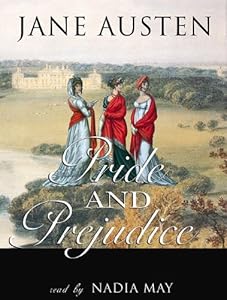
I also really like Pride and Prejudice read by Nadia May. Thank you, Sarah, (of http://frigatetoutopia.blogspot.com/) for recommending Nadia May!

Read part 1! http://thebowerofbelle.blogspot.com/2014/08/spring-summer-reading-part-1.html

Wednesday, May 1, 2013

April Reading


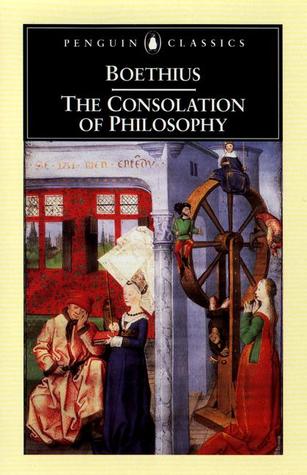
Boethius' Consolation of Philosophy
Read for the second time, and knew I needed to read it a third time the moment I finished. Not because it's so hard to understand, but because it is so necessary. I don't usually like introductions, but Victor Watt's introduction was helpful. (Hopefully more on this book after another reading.)


What Matters in Jane Austen? Twenty Crucial Puzzles Solved by John Mullan
The title of this book looked promising and I was not disappointed. The author knows his way around Miss Austen's novels, and pointed things out that I had missed. I enjoyed the whole book, but my two favorite chapters are, "What Do the Characters Call Each Other?" and "What Do Characters Read?"


The Luck of the Bodkins by P. G. Wodehouse
With characters named Monty Bodkin, Gertrude Butterwick, Miss Lotus Blossom, and Ikey Llewellyn how could one go wrong? Mr Wodehouse never disappoints and this was no exception. See my favorite quotes from the book HERE.


The Well-Trained Mind: A Guide to Classical Education at Home by Susan Wise Bauer and Jessie Wise
I wanted to re-read this before homeschooling next school year. It has many resources that I have found helpful.

What are you reading?

Friday, April 12, 2013

dark eyes


Over at Classical Quest she mentions having a Friday Quote. Sounds fun to me! Here's a favorite (one she had too!).
Mr. Darcy had at first scarcely allowed [Elizabeth] to be pretty; he had looked at her without admiration at the ball; and when they next met, he looked at her only to criticize. But no sooner had he made it clear to himself and his friends that she had hardly a good feature in her face than he began to find it was rendered uncommonly intelligent by the beautiful expression of her dark eyes. To this discovery succeeded some others equally mortifying. Though he had detected with a critical eye more than one failure of perfect symmetry in her form, he was forced to acknowledge her figure to be light and pleasing; and in spite of his asserting that her manners were not those of the fashionable world, he was caught by their easy playfulness. Of this she was perfectly unaware; -- to her he was only the man who made himself agreeable nowhere, and who had not thought her handsome enough to dance with.
~ Pride and Prejudice by Jane Austen

Wednesday, July 18, 2012

I do think of her in every variety of circumstance


Wanted to share this post on Jane Austen's death day today. The relationship she had with her sister was really amazing, and for those who have cared for and lost someone close Cassandra's words will ring true. http://sarahemsley.com/2012/07/18/never-was-human-being-more-sincerely-mourned/

Wednesday, March 7, 2012

'Northanger Abbey' Quiz Answers


Well, I see that someone out there has done their homework!  Way to go! Pat yourself on the back - you are the only persons brave enough to answer all 18 questions of the quiz (let alone one). Some of the answers in the book may vary a bit, so here they are. (Taken from So You Think You Know Jane Austen?: A Literary Quizbook by John Sutherland & Deirdre Le Faye.)

1) Q. How many children do the Reverend Mr and Mrs Morland have? How many of their Christian names do we know?

A. The Moreland's have 10 children. At the beginning of the narrative Catherine is 17 (18 when she marries). She has 3 older brothers, James (about 22), Richard (about 20), and a third, unnamed (about 18). Sarah ('Sally') is 16. When Catherine returns to Fullerton and the end of the novel we are briefly introduced to the two youngest of the family, George (6) and Harriet (4). There are 3 unnamed boys between Sally and George (we assume they are boys because they are away at school).

2) Q. Where did Henry go to university?
A. Oxford. But he in no way resembles his fellow Oxonian, Thorpe.

3) Q. What are the 'friends of Henry's solitude' at Woodston?
A. 'A large Newfoundland puppy and 2 or 3 terriers'

4) Q. What aspect of Catherine's walk does General Tilney particularly admire?
A. The elasticity, meaning Catherine's gait is springy, lithe, light-footed.

5) Q. What do we know of Henry's complexion and what does this mean?
A. He has 'brown skin, with dark eyes, and rather dark hair'. Fair and pallid complexions were more fashionable. Henry's color suggests an outdoor life. His brother, Captain Fredrick Tilney, has a florid complexion suggestive of a dissipated mode of life which his brother, Henry, avoids.

6) Q.What color dress (as Mrs Allen's needle-sharp eye notes) does Miss Tilney 'always wear'?
A. White. It means the Tilneys have a full compliment of servants. She need not wear clothes more than once before they are laundered. In Mansfield Park, Mrs Norris believes in turning away maids who presume to wear white - that colour is above their station in life.

7) Q. Who says, 'after all the romancers may say, there is no doing without money'?
A. Isabella Thorpe, gold-digger that she is.

8) Q. For what does the General rebuke Fredrick on the day the rest of the family leave Bath?
A. Being late for breakfast.

9) Q. Why, having just arrived at Bath (to arrange accommodations for himself and his father and his sister) does Henry suddenly leave, and what should we deduce from his departure?
A. He returned to Woodston to take a Sunday service, declining to leave it to his curate. His conscientiousness contrasts with that of the two truanting Oxonians.

10) Q. On the trip to Northanger Abbey we are informed that Catherine has a 'new writing desk'. What may we deduce from it?
A. She is dutifully thinking of writing letters, and, needless to say, this is a good quality in Austen's fictional world. Catherine must have bought it with money given her for clothes. Isabella, doubtless, would have not wasted her substance on a writing desk.

11) Q. Why does Catherine not, as she plans, steal out at midnight to investigate the 'mysterious apartments' in which, she is convinced, the General's poor wife is secretly incarcerated?
A. She falls asleep.

12) Q. Why does Jane Austen specifically tell us that Catherine has a 'charming game of play with a litter of puppies just able to roll about' in Henry's stable-yard at Woodston?
A. Catherine is an instinctively affectionate country-bred girl, without any squeamish fears of getting her hands or dress dirty, and Henry observes her kindheartedness.

13) Q. In the company of Henry and Eleanor, General Tilney clearly seems to think that Catherine is the Allens' heiress (basing this on John Thorpe's misinformation). Are Eleanor and Henry similarly deceived as to Catherine's wealth and handsome prospects?
A. Surely not. Eleanor would have noted Catherine's lack of valuable jewels and modest wardrobe.

14) Q. Catherine thinks Isabella is now engages to Captain Tilney and that the Captain will gallop back to his father (as James rushed back to Fullerton) for paternal permission. Henry's guess is that his brother's marrying Isabella is 'not probable'. Has he know this from the first?
A. Yes.

15) Q. Why has Catherine, even before the General's wrathful return, suggested that she should, perhaps, leave?
A. She will be intruding, she says, and intruding on the privileges of a guest. One presumes the Morlands have brought their children up to be well mannered.

16) Q. Why is Henry not at Northanger Abbey when Catherine is summarily banished?
A. It is Sunday and he is taking the service at Woodston.

17) Q. How long is it before Henry appears at Fullerton to propose?
A. Three days. He has taken a whole day to consider his rebellious action. It is a rational decision, he has, of course, his ('very considerable') personal fortune from his mother's 'settlements'.

18) Q. How long do Henry and Catherine have to wait for parental consent?
A. One year.


Sunday, February 19, 2012

A Quiz


I am of the opinion that is is time for a quiz. 'You will be quizzed  famously!' (...sorry, John Thorpe there for a minute) Are you up for a contest? Do you have sporting blood in your veins? Answer that question in the affirmative and then answer as many of the below questions as you can, and feel free you use your book.

Yes, this is an open book test. Boy, I am a nice teacher. All of these q. s pertain to Jane Austen's Northanger Abbey which some of you just read, so perhaps it's still fresh? We shall see... The contest will be open for at least a week so everyone has time to put down their most profound and scholarly answers... or whatever you've got.

All of these questions are taken from So You Think You Know Jane Austen?: A Literary Quizbook by John Sutherland & Deirdre Le Faye. And I have it, so I already know all of the answers. Yes, I looked at the back of the book. I'm sorry. Not really.


Questions:

1) How many children do the Reverend Mr and Mrs Morland have? How many of their Christian names do we know?

2) Where did Henry go to university?

3) What are the 'friends of Henry's solitude' at Woodston?

4) What aspect of Catherine's walk does General Tilney particularly admire?

5) What do we know of Henry's complexion and what does this mean?

6) What color dress (as Mrs Allen's needle-sharp eye notes) does Miss Tilney 'always wear'?

7) Who says, 'after all the romancers may say, there is no doing without money'?

8) For what does the General rebuke Fredrick on the day the rest of the family leave Bath?

9) Why, having just arrived at Bath (to arrange accommodations for himself and his father and his sister) does Henry suddenly leave, and what should we deduce from his departure?

10) On the trip to Northanger Abbey we are informed that Catherine has a 'new writing desk'. What may we deduce from it?

11) Why does Catherine not, as she plans, steal out at midnight to investigate the 'mysterious apartments' in which, she is convinced, the General's poor wife is secretly incarcerated?

12) Why does Jane Austen specifically tell us that Catherine has a 'charming game of play with a litter of puppies just able to roll about' in Henry's stable-yard at Woodston?

13) In the company of Henry and Eleanor, General Tilney clearly seems to think that Catherine is the Allens' heiress (basing this on John Thorpe's misinformation). Are Eleanor and Henry similarly deceived as to Catherine's wealth and handsome prospects?

14) Catherine thinks Isabella is now engages to Captain Tilney and that the Captain will gallop back to his father (as James rushed back to Fullerton) for paternal permission. Henry's guess is that his brother's marrying Isabella is 'not probable'. Has he know this from the first?

15) Why has Catherine, even before the General's wrathful return, suggested that she should, perhaps, leave?

16) Why is Henry not at Northanger Abbey when Catherine is summarily banished?

17) How long is it before Henry appears at Fullerton to propose?

18) How long do Henry and Catherine have to wait for parental consent?

John Sutherland & Deirdre Le Faye suggest that if you score over 15, good for you! If you scored over 10 but under 15, skim the novel again. Over 5 but under 10, reread the novel. Under 5, throw the book away and watch TV.

(aerial view of Bath)

Friday, December 30, 2011

'A Jane Austen Education' book


A Jane Austen Education (how six novels taught me about love, friendship, and the things that really matter) by William Dereciewicz, while not necessarily a cheerful book in and of itself, gives me hope for the post-moderns. Dereciewicz, a book critic and former associate professor at Yale, professes in his new book that of Jane Austen's six novels Mansfield Park and Sense & Sensibility were the hardest for him to swallow; this is by no means surprising as these specifically focus on social virtue which is completely foreign to the post-modern mind. Things like inner-knowledge and self-awareness - which both Fanny and Elinor practice - is elusive for most of us. In her book, Jane Austen's Philosophy of the Virtues, Emsley suggests that Fanny does not only consider what is best for herself, but what is best universally. "Part of Fanny's wisdom involves not just the strength of her own mind and the rightness of her own judgment but also the ways in which she thinks in the context of tradition and authority..." Tradition and authority....hmmmm....these grate on the modern ear as well, but I was encouraged by Dereciewicz's allowing Jane Austen to teach him, and through his book, me. He resembled many who have made so many assumptions about Austen that are based on the movie adaptations at best (or would that be worst?), but as he reads her books his assumptions melt away to be replaced by revelations about himself. He states, 
I was used to thinking about growing up in terms of going to school and getting a job...If I had been asked to consider what kinds of personal qualities it might involve -- which I doubt I ever was -- I would have spoken of things like self-confidence and self-esteem. As for anything like character conduct, who even used such words anymore? (p.51)
This book is by and large autobiographical. Yes, it is about Jane Austen, but it is more about Deresiewicz and how he was changed by reading her books. If read as an autobiography his book is rewarding. If read as a definitive work on Austen...not so much. I enjoyed traveling along with him through Austen's books, learning along with him, being reminded of why they are important to life. But I can't help but know that there is still a piece of the puzzle missing for him. The 'why' of it all. Why do we care? Why do we need to practice the social virtues? God is the implicit missing link in this chain of social virtue - it is the theological virtues of Faith, Hope, & Love which provide the soil for the classical virtues (Prudence, Justice, Wisdom, etc.) and the social virtues which then arise from them both. I still felt that he was missing these key things, although it is absolutely encouraging to see an iron-clad post-modern mind willing to really listen to Austen's works and let it speak to them, rather than re-interpreting her to fit their ideology. Even a modern mindset is no proof of invulnerability against the art & the thought of Austen - what an encouraging thought.

However, there is a great deal more to say, and much farther to go. When, for example, he tells us that Henry was trying to show Catherine how absurd the social conventions of her day were (p.88), or when he tells us that Anne's "family simply didn't matter to her anymore" (p.183), he is translating her books with a post-modern eye; misrepresenting Austen's essential elements. Austen's practicing of the virtues is not to avoid pain or increase pleasure (i.e. to be 'happy'), but rather the change of self which involves wisdom and leads to true and lasting joy. He writes, however, that Emma changed his whole way of thinking about life. "I still loved modernism, I just no longer believed it was the only way to make art, and I certainly didn't think it was the way to live." (p.34) The fact that he was willing to be changed by Austen gives me hope that the virtues of which she wrote will someday find a way into his soul.

Thursday, May 19, 2011

O, Henry

My best friend and I just finished re-reading Jane Austen's Northanger Abbey, and the thing that struck me was that more than any of her other characters JA shares Henry Tilney's sense of humor. I can readily imagine her making the same spirited and humorous replies as he makes. And, indeed, we do hear her make them in her letters. I can't imagine Henry Tilney saying anything that would displease his creator. Although, JA said that Darcy and Edmund Bertram were her favorites, I am sure she would've laughed a great deal with Henry. Perhaps that is why he is named after her favorite brother?

Thursday, March 24, 2011

from Mrs Sarah Emsley

I enjoy, from time to time, perusing Sarah Emsley's site, and came across this the other day. So, I do not take credit for the following. Find it here. She says,

"Have you ever searched the online concordance to Jane Austen’s novels for an apt, pithy quotation to write on a special occasion card?  I’ve tried this a few times, coming away disappointed each time because it’s so difficult to pin Austen down to a line or two of inspiration.  The novels as a whole may be inspiring, but a simple line or two of good wishes can be hard to find.  For example, here are some of the possibilities for a wedding:

Happiness in marriage is entirely a matter of chance.  (Pride and Prejudice)

She meant to urge him to persevere in the hope of being loved in time, and of having his addresses most kindly received at the end of about ten years’ happy marriage.  (Mansfield Park)

I cannot easily resolve on anything so serious as Marriage; especially as I am not at present in want of money, and might perhaps, till the old Gentleman’s death, be very little benefited by the match.  (Lady Susan)

I’m always pleased, therefore, when I come across a line that is both memorable and inspiring, such as this one, from a letter to Cassandra in 1815, when their brother Henry was unwell and Jane was concerned about the uncertainties of his illness:

We must think the best & hope the best & do the best.  (November 26, 1815)

What more can anyone do?"
http://sarahemsley.com/
http://sarahemsley.com/2011/01/13/inspiration-from-jane-austen/

Monday, December 27, 2010

Conclusion: After Austen

Conclusion: After Austen

In the conclusion of her book, Sarah Emsley asks the questions, "What happens to the virtues after Austen? There is certainly an Austen-inspired tradition of the country-house novel and/or the novel of manners, but is there a tradition of novels after Austen that represents the classical and theological virtues as a coherent, positive, and flexible tradition of ethical thought and behavior?" Emsley suggests that the writers who come the closest are George Eliot, Henry James, and Edith Wharton.

George Eliot and the Duty to Sympathize

Emsley points out that Eliot sees, like Austen, "the dangers of life lived according to an inflexible moral code", but, unlike Austen, believes the "route to virtue is found through sympathy with the feelings of others." Emsley cites examples from several of Eliot's works showing that for Eliot, "sympathy is not just the first of the virtues, but also the end of the virtues. Sympathy is not necessarily the path through to the other virtues, including justice and faith. It appears an all-encompassing virtue that is related to love, but even more closely related to tolerance...In Eliot's life, faith had already disappeared, and moral duty alone remained."

Ethical Deliberation in Henry James

Looking at several of James's novels, we see "His characters analyze, agonize, and make excruciatingly careful discriminations about ethics," writes Emsley, "but they rarely act, and they have little confidence that thinking about ethics will lead to positive ends, let alone to happiness and fulfillment...Morality has become hazy, and the process of deliberation, judgment, and action that is so essential for Austen's characters no longer seem possible...By the time of James's later novels, virtue seems not just a mysterious desert, but an unfathomable sea." For James the focus is not on practicing the virtues, but the analysis of ethical deliberation. Deliberation, not over doing what is right, but over what will make one comfortable. The focus is on values, not virtues, and values can be negotiated. Emsley states, "for James the main virtue becomes knowledge...Like many writers influenced by nineteenth-century skepticism, both James and Eliot found it difficult to imagine faith and hope as active parts of the moral life."

Edith Wharton and the Value of the Authentic Self

Emsley believes that "Wharton's novels, like those of James and Eliot, lack some form of hope. Hope does not require happy endings, but it does require faith in something positive." Where Austen's characters worked to balance the virtues, Wharton's characters work to balance authenticity and sincerity of the self. Using Wharton's novels as examples, Emsley shows that for "Wharton's hero and heroine the ruling virtue is love...she focuses on sincerity and love as common values."

Austen's Achievement

Emsley convincingly argues that these writers, Eliot, James, and Wharton, focus on a single virtue, whether it be sympathy, knowledge, or sincerity, rather that the range of the virtues as Austen did. Austen does not limit herself as these other writers do, and is unique, as MacIntyre points out, in her "extensive understanding and demonstration of how these virtues can be lived as well as analyzed philosophically." Throughout her book, Emsley emphasized "the development of virtue as a process of learning to handle the tensions among the virtues in a flexible way, while still adhering to absolute standards of ethical behavior. The source of those absolute principles is Austen's own Christian faith, which firmly underlies her work and the world of her novels."

In Emsley's opinion, Pride and Prejudice is Austen's "most compelling treatment of the practice of the virtues...Both Elizabeth and Darcy are subject to a reexamination of their own minds before they can understand each other...That [they] together come to understand justice through the educative power of love is central to the brilliance of this novel." Emsley describes Jane Austen as "the most recent effective, imaginative, and great writer who engages in her novels with the tensions and balances among the classical and theological virtues."
These thoughts are taken from the Conclusion: After Austen of Sarah Baxter Emsley's book, Jane Austen's Philosophy of the Virtues.

Wednesday, December 22, 2010

Balancing the Virtues in Persuasion

Chapter 7: Balancing the Virtues in Persuasion

Jane Austen tells us of Anne Elliot, the heroine of Persuasion, that she "had been forced into prudence in her youth, she learned romance as she got older." Anne is tested as no other JA heroine is tested. In most cases the heroine learns about virtue along the way and gets her man relatively quickly, but not Anne. Anne must wait eight and a half years. Emsley convincingly argues that it is "Firmness, specifically firmness in resisting persuasion, is a central concern for Austen in this novel. When is firmness a good thing, and how is firmness related to strength, fortitude, and hope?...this novel provides further clues to Austen's Aristotelian and Christian view of virtue, which can help to illuminate the other novels and explain how Austen sees the virtues in harmony as well as tension with one another." Emsley goes on to point out that for JA "ethics has to do with character rather than rules," citing the example of Anne confiding to Wentworth, at the end of the novel, that she was right in taking Lady Russell's advice, even though it was the wrong advice. Anne tells him, "I was right in submitting to her, and that if I had done otherwise...I should have suffered in my conscience."
The primary tension early on in the story for Anne and Wentworth is that of firmness. Wentworth's motto being, "let those who would be happy be firm." When asked by his sister, Mrs Croft, what he wants in the woman he marries, he tells her, "a strong mind with sweetness and manner." We are told that Anne was not out of his thought when he gave this description, but he is thinking perhaps her mind is not strong enough. Wentworth equates firmness with a strong mind, not realizing that Anne does possess a strong mind. Wentworth must reevaluate his definition of firmness when Louisa (who he had praised for being firm) is firm to the point of stubbornness, and as a result causes herself great injury. And it is Anne's strong mind that sees them through the situation. After Lousia's fall at Lyme, Austen tells us, "Anne wondered whether it ever occurred to him now, to question the justice of his own previous opinions as to the universal felicity and advantage of firmness of character; and whether it might not strike him, that, like all other qualities of the mind, it should have its proportions and limits."

Emsley states, "Austen's reference to the proportions and limits on desirable qualities recalls Aristotle's doctrine of the mean, in which virtuous qualities have proportions and limits. Though Wentworth himself does not realize it, he does think that to be sometimes persuadable is a good thing...Perhaps one of the reasons he dislikes the idea of persuasion is that in the situation where it most mattered to him, he failed to persuade Anne to marry him..." Wentworth now begins to value Anne's strength of mind, asking for her opinion on how best to break the news to Louisa's parents. When recalling the accident, he confesses to Anne, "She would not have been obstinate, if I had not been weak." Wentworth is beginning to review his own character. Coming to the self-realization that it was his weakness of pride that has cost them years of happiness, "I was proud, too proud to ask again." Perhaps now he is also reassessing his swift judgment of Anne that he made all those years ago. Emsley writes, "Thus Wentworth has come to question firmness, and in doing so has learned something of Anne's Aristotelianism, as well as of her Stoic fortitude and Christian patience and humility." Austen tells us, "he had learnt to distinguish between the steadiness of principle and the obstinacy of self-will, between the daring of heedlessness and the resolution of a collected mind...[Anne's] character was now fixed on his mind as perfection itself, maintaining the loveliest medium of fortitude and gentleness."

Emsley argues that, "For Anne, the primary virtue is hope." Anne keeps her spirits up, takes joy in being useful to her family and the Musgroves. She does avoid a false hope, or expectation, but does not wait for happiness to find her. Anne could apply the description of her friend, Mrs Smith, to herself when she observes, "A submissive spirit might be patient, a strong understanding would supply resolution, but here was something more, here was that elasticity of mind, that disposition to be comforted, that power of turning readily from evil to good, and of finding employment which carried her out of herself, which was from nature alone." Austen's use of the phrase "elasticity of mind" shows that the virtue of hope is not stagnate, but must be exercised and used.

It is not only Wentworth who must discern the balance of the virtues in himself and others. Anne, on meeting her cousin Mr Elliot, observes his character. She does not approve of what she remembers of his character, but leaves open the possibility that he has changed. She cannot put her finger on it right away, but realizes that, "There was never any burst of feeling, any warmth of indignation or delight, at the evil or good of others." What Anne at first thinks is Mr Elliot only being "too generally agreeable," she later realizes, through Mrs Smith's enlightenment, is a true and great character flaw.

Anne is constant, and, as Emsley says, "Constancy is closely related to faith...[Anne] is loving, hopeful, and faithful. Persuasion raises the problem of firmness and then shows that elasticity and flexibility are more important to the practice of virtue than is firm adherence to rules...Persuasion is in fact Austen's clearest articulation of her interest in both classical and Christian virtues...If she had lived to revise this novel, perhaps she would have made the references to virtue more subtle, as they are in other novels, but as it is in Persuasion...[it] contains the closest thing to an explicit theory of the unity of classical and Christian virtues."

These thoughts are taken from the seventh chapter (entitled, Balancing the Virtues in Persuasion) of Sarah Baxter Emsley's book, Jane Austen's Philosophy of the Virtues. Next up, Conclusion: After Austen

Tuesday, December 21, 2010

Learning the Art of Charity in Emma

Chapter 6: Learning the Art of Charity in Emma

Emma is a young woman who knows her own happiness, but, as Sarah Emsley suggests, she does not always know the happiness of others. She seems to have it all, but in the course of the novel, she is brought to the realization the that perhaps she does not know it all. Emsley says, "I read Emma as primarily responsible for her own moral education, and education in charitable thought. Her education is dependent on her choosing to change..."

This idea is contrasted with critics who have argued that it is Mr Knightley who tells Emma what to think and how to act, but Emma, as we learn, can do this very well on her own. But her conversations with Mr Knightley help her to stop and think. Emma does not suffer from too much solitude, in fact, she does not allow enough time for self-knowledge. Emma spends most of her time arranging the lives of others and must learn that charity is not about power.

Her first moment of realization is when Mr Elton, whom she had destined for her friend, proposes- "making violent love to her." She is then forced to stop and think. "Emma sat down to think and be miserable.- It was a wretched business, indeed!" She realizes that she had "taken up the idea...and made everything bend to it. Emma admits to herself, "The first error and the worst lay at her door. It was foolish, it was wrong, to take so active a part in bringing any two people together...She was quite concerned and ashamed, and resolved to do such things no more." When Emma sees Mr Elton again she is reminded that it was she who brought about the misunderstanding. "...his sight was so inseparably connected with some very disagreeable feelings, that except in a moral light, as a penance, a lesson, a source of profitable humiliation to her own mind, she would have been thankful to be assured of never seeing him again."

Later after Harriet sees the Martins, she hurries to Emma's, "Oh, Miss Wodehouse, do talk to me and make me feel comfortable again," but Emma has learned something from her experience with Mr Elton. "Very sincerely did Emma wist to do so; but it was not immediately in her power. She was obliged to stop and think. She was not thoroughly comfortable with herself." Emsley states, "Emma's discomfort at this point is not enough to seriously reexamine her initial judgment that Robert Martin is not good enough for Harriet, but it is enough to make her stop and think. And if she does this often enough, Austen implies, she will approach a better understanding of truth, and will be better equipped to behave charitably to others. What charity is not, therefore, is looking after others by telling them how to live. This is Mrs Elton's idea of charity (Jane Fairfax)...Mrs Elton also sees charity as a matter of style...what those in power offer to those without power."

A positive example of charity is that of Miss Bates. Emma admits, "I really believe, if she had only one shilling in the world, she would be very likely to give away sixpence of it." Emma often shows generosity to Miss Bates and others who are poor, but, as Emsley argues, "her charity her is mostly action, not thought." And it is not empty action, to be sure, "enter[ing] into their troubles with ready sympathy, and always gave her assistance with as much intelligence as good will." What Emma must discover, therefore, is how to be charitable in her thoughts.

Emma's second moment of realization is at Box Hill after teasing Miss Bates. It does not come immediately, and may not have come at all, if Mr Knightley had not said something- prompting Emma to think. Although it is Mr Knightley who initially opens her eyes, it is Emma herself who "as she reflected more, she seemed but to feel it more. She had never been so depressed." Toward Miss Bates, Emma begins to realize, "She had been often remiss, her conscience told her so; remiss, perhaps, more in thought than fact; scornful, ungracious." Emsley argues, "Mr Knightley has chided her only for the one public remark, but Emma's consciences tells her that she has been thinking scornfully of Miss Bates all along, even while sending her pork and paying her visits...In fact, Emma's own conscious is more severe in judging her thought and action than Mr Knightley is. The realization that she has not loved her neighbor as herself..."

Again it takes prompting for Emma to have her third moment of realization. When Harriet comes to Emma gushing that she wishes to marry Mr Knightley and has some idea of him thinking along the same lines, Emma quickly becomes aware "that Mr Knightley must marry no one but herself!" Austen describes Emma's mind as one that "makes rapid progress." Emsley writes, "This description is important: Emma has the kind of quick mind that can analyze behavior thoroughly. Her intelligence is sharp, but her initial perceptions are a little dull, perhaps because she is so confidant of her social position that she lacks the critical impulse...Intellectual self-examination may be painful, whether one is analyzing the difficulties of acting charitably toward other people, or the complexities of romantic love."

The virtuous life is not a perfect one. It is, like Emma, "faultless in spite of all [it's] faults." Emsley makes the point that, "Austen suggests, one may achieve something like perfect happiness, not happiness as an end result, but as a process open to revision."
These thoughts are taken from the sixth chapter (entitled, Learning the Art of Charity in Emma) of Sarah Baxter Emsley's book, Jane Austen's Philosophy of the Virtues. Next up, Chapter 7: Balancing the Virtues in Persuasion

Sunday, December 19, 2010

Fanny Price and the Contemplative Life


Chapter 5: Fanny Price and the Contemplative Life

Fanny Price, the heroine of Jane Austen's Mansfield Park, is probably the least liked, and the least understood of all of Jane Austen's heroines. Fanny is more like Elinor Dashwood or Anne Elliot in that she is already virtuous, but she must learn to trust her judgment. Emsley writes, "In this chapter...I argue that she is interesting because her liveliness is in the life of the mind. She is thoughtful, contemplative, and actively engaged in thinking through the situations she confronts in the course of the novel. She is neither dull nor passive. She is temperate, she engages in serious philosophical contemplation, and she may be Jane Austen's strongest heroine."

In the beginning of Mansfield Park we get a glimpse of Fanny as a young girl. Her Aunt Norris sees her education as deficient because she had not learned to recite the facts that Maria and Julia have learned. Jane Austen, however, tell us that it is Maria and Julia who are, "entirely deficient in the less common acquirements of self-knowledge, generosity, and humility." This criticism is also applicable to Mary Crawford. Emsley points out that "self-knowledge is a virtue for all Austen heroines." We are reminded of Elizabeth Bennet- "Till this moment I never knew myself."

Critics of Fanny are on both extremes. Some say she is too submissive, that she gives in too easily. Others say that she is too priggish and hard-headed. She does give into her Mansfield family, making sacrifices for them daily, but in matters of import she does not just roll over. Because she is so obliging, Henry, once he has decided to marry her, counts on her "graces of manner and goodness of heart." Mary tells her brother, "You will have a sweet little wife; all gratitude and devotion." When she does reject Crawford on the basis of his past behavior, everyone is shocked. In making this decision, she is sacrificing the good opinion of those she loves (not to mention sacrificing worldly goods). She exhibits the virtue of fortitude when, like Elizabeth Bennet, she refuses the marriage proposal because she does not believe it to be right. Emsley says, "She may have been docile in the past, easily serving others and never asserting herself, but to speak out, to resist, and to hold fast to her decision is not proof of morally prim and proper behavior, but of strong, independent judgment coming from someone long used to submission."

Fanny is aware of the workings of her mind and heart in a way that few others are. Even Edmund does not realize this to be the case. When Fanny tells him, "I am afraid we think too differently, for me to find any relief in talking of what I feel," he responds, "Do you suppose we think differently? I have no idea of it." Edmund is used to Fanny and he always agreeing as they had used to, but his blindness to Mary Crawford's failings makes this impossible. Later he will realize that Fanny's opinion was the right one, and that he was not in love with Mary but "the creature of my own imagination."

When Crawford flatteringly tells Fanny "Your judgment is my rule of right," she exclaims, "Oh, no!- do not say so. We have all a better guide in ourselves, if we would attend to it, than any other person can be." Emsley suggests that, " Of all of Jane Austen's heroines, she is the one who reaches philosophical wisdom."

Edmund (and others) think perhaps that Fanny has refused Crawford because she "could tolerate nothing that she was not used to...habit has the most power...and novelty the least." But this is shown in several instances to not always be case. One example of her finding pleasure in something new is the trip to Southerton which she enjoys very much. Jane Austen shows Fanny as one who is not stagnate, but growing. Fanny's plants and books, both representing growth and development, are mentioned several times throughout the novel. Fanny values the seasons, the changes outdoors, "the growth of the laurels and evergreens."

Fanny is used to knowing her own heart, unlike Crawford who is not "in the habit of examining his own motives and of reflecting to what the indulgence of his idle vanity was tending." Emsley states, "The distinction between good and bad habits depends on one's definition of comfort...The definition of comfort is important because peace is moral comfort, whereas ease is only the avoidance of irritation."

Fanny does not, suggests Emsley, only consider what is best for herself, but what is best universally. "Part of Fanny's wisdom involves not just the strength of her own mind and the rightness of her own judgment but also the ways in which she thinks in the context of tradition and authority...Fanny Price is Jane Austen's contemplative heroine. She is virtuous and wise, and she knows how to be temperate."

Jane Austen tells us of Edmund and Fanny at the end of Mansfield Park, "With so much true merit and true love, and no want of fortune or friends, the happiness, of the married cousins must appear as secure as earthly happiness can be.- Equally formed for domestic life, and attached to country pleasures, their home was the home of affection and comfort..."

These thoughts are taken from the fifth chapter (entitled, Fanny Price and the Contemplative Life) of Sarah Baxter Emsley's book, Jane Austen's Philosophy of the Virtues. Next up, Chapter 6: Learning the Art of Charity in Emma

Saturday, December 18, 2010

Pride and Prejudice and the Beauty of Justice

Chapter 4: Pride and Prejudice and the Beauty of Justice

One of the reasons Pride and Prejudice is so intriguing is because it is controversial. There are those who take JA's words to her sister literally when she said the novel was "too light & bright & sparkling." But when reading these words in context it is clear that she is joking, "it wants...a long Chapter...of solemn specious nonsense."

Then there are those who see this as a serious novel in which Elizabeth must lose all of her wit and vivacity to subject herself to Mr Darcy. It is seen as JA speaking as a feminist to other enlightened feminists, showing the reader what was (but should not have been) accepted during the 1800s. Emsley says, "I argue...that the change in Elizabeth is not due to repression and humiliation, but to a liberating process of education that leads to Christian humility. Humility in Pride and Prejudice is not abject self-abasement, but a right sense of one's own fallibility, and it is not just something Elizabeth learns in order to submit herself to Mr Darcy, but something that they both learn so that they may together submit to God in the context of Christian marriage."

Emsley goes on to say that she does see P&P as the most serious of Austen's novels, but not on account of the French Revolution or the Napoleonic Wars, but "because it deals with the issues of courage and justice." She states, "Both the seriousness and beauty of Pride and Prejudice arise out of Austen's concern with how to get from sin to justice. Part of the answer to the question of this process has to do with humility, part of it also has to do with anger, and most of it has to do with love."

Is love an important enough topic for a JA novel? Are readers of P&P just escapists, indulging in a fantasy world which culminates in the perfect marriage? Although the movies may give this impression, this is hardly the theme of the book. As Emsley argues, "Tragedy is never far away in Pride and Prejudice, and the brilliance of Austen's heroine is that Elizabeth can see the materially disastrous consequences of acting according to conscience and the good, yet she does the right thing anyway...The question of judgment and education are not frivolous, nor is the problem of how to bring about the right kind of learning. Austen's question throughout Pride and Prejudice is Plato's question in the Meno: 'Can virtue be taught?'"

Emsley also points out that some critics of Austen think of her as bitter and hateful, writing only with biting satire. Words in P&P such as anger, prejudice, and judgment rub people the wrong way. Emsley says that "Anger, strangely enough, is closely tied to the practice of amiability." As Aristotle noted, the excess of amiability is obsequiousness. Mr Collins and his unbearable "arrangement of elegant compliments" is the evident example here. Emsley says, "The unfortunate Mr Collins aspires to the virtues of civility and humility, and it would be impossible to say that he falls short of them, for he far exceeds the mean in both cases...Excessive civility turns into pompous behavior." On the other extreme we have Lady Catherine. P&P describes her thus, "Lady Catherine was generally speaking- stating the mistakes of the three others, or relating some anecdote of herself." When Elizabeth is civil towards both, she is learning to practice the virtues- especially amiability.

A key scene in the book is the first proposal scene of Mr Darcy and Elizabeth. They both attempt to be civil but lose "all compassion in anger." Elizabeth "tried, however, to compose herself to answer him with patience, when he should have done." Darcy becomes "pale with anger," but speaks to her "in a voice of forced calmness" and "with assumed tranquillity [sic]." Emsley suggests that anger is not always a bad thing, as Darcy and Elizabeth struggled with the competing virtues of amiability and truthfulness before becoming angry, and the outburst of honesty and anger that followed was not resentful or revengeful, but brief and perhaps necessary.

Elizabeth's very next meeting with Darcy at Pemberley demonstrates that he has been practicing amiability. Emsley points out, "Righteous anger is a tremendously difficult concept, and it is next to impossible to practice in a virtuous way, and yet in the first proposal scene both Elizabeth and Darcy are justified to some extent in their anger with each other...They are trying to find the truth." Near the end of the novel, Darcy says to Elizabeth, "How you must have hated me after that evening," Elizabeth responds, "Hate you! I was angry perhaps at first, but my anger soon begin to take a proper direction."

Another 'no, no' word is 'prejudice.' Emsley writes, "If prejudice is understood as prepossession, or adherence to principle, it is quite different, and much more acceptable, than the idea of judging adversely in advance of the situation or the facts...Good judgment always relies to some extent on prejudices in favor of the good- the difficult thing is determining when a judgment is too hastily made...Judgment involves discrimination, another unfashionable word, in order to make sure that it is good judgment. Tolerance, compassion, and sympathy invoked without limits are just as dangerous as prejudice, discrimination, and judgment made without reason."

In other words, it is not wrong that Elizabeth and Darcy make judgment calls about one another, but the timing and the way in which they do it. When Elizabeth first reads Darcy's letter, she is too angry to do him justice, but she does read it, and reading the letter, argues Emsley, is the first part of her education. When she realizes the truth about Wickham, her reaction is, "How humiliating is this discovery!- Yet how just a humiliation!- Had I been in love, I could not have been more wretchedly blind." Elizabeth does not beat herself up about it, though, once she realizes, "Till this moment I never knew myself," she begins to think of others- of Jane and Bingley.

When Darcy helps Wickham and Lydia, Emsley says, "Darcy has had to humble his pride and act with compassion, not condescension. And Elizabeth is humbled not because he has condescended to help her family, but because she feels anew the injustice of her early treatment of him."

Sarah Emsley sums up her chapter thus, "It is in the education of judgment that virtue can flourish; courage and justice and love are the serious ideals of Pride and Prejudice...it is not an ethical manual or treatise, but a serious and comic novel of morals and manners." At the end of JA's novel, Elizabeth writes to her Aunt Gardiner saying, "I am the happiest creature in the world. Perhaps other people have said so before, but no one with such justice."

These thoughts are taken from the fourth chapter (entitled, Pride and Prejudice and the Beauty of Justice) of Sarah Baxter Emsley's book, Jane Austen's Philosophy of the Virtues. Next up, Chapter 5: Fanny Price and the Contemplative Life

Thursday, December 16, 2010

Sense and Sensibility: "Know your own Happiness"


Chapter 3: Sense and Sensibility: " Know your own Happiness"

Many people have seen sense and sensibility as things to be pitted against each other. That it is a case of 'either, or'. Marianne tells Elinor, "to be guided wholly by the opinion of other people. I thought our judgments were given us merely to be subservient to those of our neighbors, this has always been your doctrine I am sure." Many have see Elinor, as the personification of sense, in this light - one who only takes into account propriety and manners. Elinor, however, states, "My doctrine has never aimed at the subjection of understanding. All I have ever attempted to influence has been the behaviour. You must not confound my meaning."

Emsley tells us, "In Sense and Sensibility the virtues that come under Austen's more intense scrutiny are the social virtues of amiability, tact, and honesty; the heroic virtue of fortitude, and the Christian virtues of love and faith. This is not to say that other virtues (such as temperance) do not come into play, but only that these are among the most prominent."

Austen again harkens back to Aristotle's terms for "the virtues of social intercourse- friendship, truthfulness, and ready wit or tact." Sense and Sensibility deals with loving your neighbor. Emsley writes, "Austen is interested in how rules and categories and patterns of virtue are fitted to the person and the moment...Friendship, or amiability, is an especially interesting virtue: Aristotle says he has no name for it- there was no precise Greek word for what he was trying to describe, and he uses the word philia as the closest approximation. 'Amiability' is Austen's term...in her representation of all three of these virtues she goes beyond the narrow definitions of the terms: this is one of the ways in which she extends the tradition."

Elinor and Marianne must learn from each other. Elinor loves deeply, but perhaps regulates her behavior too much. This does not imply, however, that her "temper is dull or her understanding is limited." Marianne's love of truth is shown throughout the book. She believes that tact is opposed to openness and honesty, therefore leaving Elinor to often smooth things over for her socially. "...thus by a little of that address, which Marianne could never condescend to practice, gained her own end, and pleased Lady Middleton at the same time."

Emsley convincingly argues that "Marianne's strong sentiments do not always lead her to virtue. In fact it is possible that she is guilty of an excess of truthfulness; that too much honesty is not virtuous." Emsley believes that "Marianne learns to value the benefits of reserve when concealment is appropriate, whereas Willoughby simply regrets that his own secrets did not remain concealed for longer, or forever." Emsley compares Marianne and Mr Darcy in their abhorrence of every sort of disguise (as Mr Darcy tells Elizabeth). Which is interesting, because the popular view is often that Darcy is reserved- not open, and that Marianne always open and honest.

Emsley tells us that "Elinor's politeness is a sign of her concern for others, and yet her sympathy does not get the better of her judgment...Thus Elinor's approach to balancing amiability and honesty, despite falling short of perfect virtue, involves a complex understanding of social life."

So when one falls short of the virtues, is one then practicing vice? Aristotle thought not (or not always). In Marianne's case, when she falls short of the virtues, she is only "guilty of moral weakness, which is much easier to correct than vice." Marianne does correct her moral weakness. She calls her own behavior, "nothing but a series of imprudence towards myself, and want of kindness to others." Marianne tells Elinor, "The future must be my proof...my feelings shall be governed and my temper improved...to have time for atonement to my God, and to you all."

It is Mrs Dashwood (when speaking to Edward) who says, "Know your own happiness. You want nothing but patience- or give it a more fascinating name, call it hope." After Marianne finds out that Edward has been engaged to Lucy, she is shocked, and asks Elinor, "how have you been supported?" Elinor's answer shows the 'hope' that her mother spoke of. When Marianne exclaims, "-- and yet you loved him!" Elinor responds, "Yes. But I did not love only him."


Marianne learns this fortitude which Elinor possesses. Emsley says, "Although Marianne changes she is Marianne still; she is not a new Elinor...She may have been educated partly by Elinor's example of the classical virtues, but if Elinor is a classical heroine (even though she marries a clergyman), and Marianne represents both classical and Christian virtues, perhaps it is Elinor's turn, at the end of the novel, to learn from Marianne, not about sensibility, but about grace."

These thoughts are taken from the third chapter (entitled, Sense and Sensibility: " Know your own Happiness" ) of Sarah Baxter Emsley's book, Jane Austen's Philosophy of the Virtues. Next up, Chapter 4: Pride and Prejudice and the Beauty of Justice

Propriety's Claims on Prudence in Lady Susan and Northanger Abbey

Chapter 2: Propriety's Claims on Prudence in Lady Susan and Northanger Abbey

In this chapter Sarah Emsley contrasts JA's earliest works, Lady Susan and Northanger Abbey. The character of Lady Susan is JA's only vicious heroine, and is not a model for female virtue! Lady Susan is an epistolary novel, and we see throughout Lady Susan's correspondence that she is conniving and cares only for herself. JA as the narrator tells us at the end, "She had nothing against her, but her Husband & her Conscience." Lady Susan is humorous as JA's juvenile works, but is longer and has a more mature feel. Austen may later focus on how virtues come into conflict with one another, but in Lady Susan her focus is more on "the villainy of human nature." Lady Susan only invokes the name of propriety when it will suit her. When she wishes Reginald out of the way for a few days so that she can continue her affair with Mr Manwaring, she acts as if they are moving too fast and pretends to be afraid of displeasing her brother.

Lady Susan has an excellent command of language and uses it to get what she desires. Some critics have argued that JA shows how Lady Susan uses her power, but then abandons the idea of female power in her later works. Emsley, however, sees that in the later novels "the heroine's pursuit of virtue is a quest for a different kind of power. Given the older definitions of virtue (or vertu) had to do with strength and power, it is important to emphasize that the virtues are moral excellences, and therefore may be seen as more powerful than aggression or manipulation."

In contrast to Lady Susan, Catherine, the heroine (or "in training for a heroine") in Northanger Abbey, is quite naive. Which may be one of the reasons that she is attractive. She is artless, open, and honest. Emsley observes, "Unlike Lady Susan, she is capable of genuinely caring for other people. In the course of the novel, Catherine begins to learn the kind of prudence that propriety requires, but the natural courage it takes to be honest and open with others is hers already...Henry learns from Catherine's openness even while he teaches her to be more prudent about social life."

Catherine learns that not all sacrifices are noble (such as choosing to go with the Thorpes and her brother when she really wanted to go with the Tilneys), not all villains are obvious (e.g. John Thorpe), and not all abbeys are haunted.

Henry and Catherine have many spirited exchanges before Catherine quite knows how to take what he says. One such time is when Henry Tilney and Catherine are dancing at the ball, and he asks her what she is thinking about. "Catherine coloured, and said, 'I was not thinking of anything.'" Henry responds, "'That is artful and deep, to be sure, but I had rather be told at once that you will not tell me.'"

JA closes Northanger Abbey with words that I could not agree with more, "To begin perfect happiness at the respective ages of twenty-six and eighteen is to do pretty well."

Where Lady Susan is innately wicked and Catherine is innately good, JA incorporates both virtues and vices in her later heroines. Elizabeth, Anne, Marianne, Elinor, and Fanny must learn the balance of the virtues.

These thoughts are taken from the second chapter (entitled, Propriety's Claims on Prudence in Lady Susan and Northanger Abbey ) of Sarah Baxter Emsley's book, Jane Austen's Philosophy of the Virtues. Next up, Chapter 3: Sense and Sensibility: "Know your Own Happiness"

Tuesday, December 14, 2010

The Virtues According to Aristotle, Aquinas, and Austen

Chapter 1: The Virtues According to Aristotle, Aquinas, and Austen

Jane Austen's father was a rector and a teacher of the classics. She had access to all sorts of literature, and inherited a rich philosophical tradition. Now whether she read philosophers and such may be open to debate (I think she did.), but we do know that she enjoyed Samuel Johnson, Shakespeare, and Fielding and through them, at least, had a familiarity with that tradition.

The first record of the idea of the four cardinal virtues is found in Plato's Republic. Aquinas then came along and interprets this classical tradition in light of the Christian virtues of faith, hope, and charity. Aristotle categorically (Isn't that his favorite way?) divides the virtues into moral, intellectual, and social.

Emsley shows in this chapter how JA uses the Aristotelian tradition in her writing, "considering moral education and the pursuit of happiness, practical versus philosophical wisdom, and the importance of process, habit, and choice in the practice of the virtues." Using this Aristotelian idea, one has a telos or an end or goal, which is often defined as "happiness" or "human flourishing." In other words, the good life. In contrast to this, Emsley shows us Kant as one who saw moral education at odds with happiness, and often at the expense of happiness. We can clearly see Aristotle's influence in Austen's work. Emma, Catherine, and Marianne come to mind as heroines who through their moral education were able to flourish.


For those only slightly familiar with Austen's novels, the assumption is made that marriage is the end goal. However, only after the characters find fulfillment and happiness through the exercise of the virtues, can they find fulfillment and happiness in marriage. And, yes, eros can certainly spur one on! This exercise of the virtues is not of ordinary virtue (as defined by Socrates) which is only right acting in order to avoid pain or increase pleasure, but the philosopher's virtue which involves wisdom. "Austen suggests that self-sufficiency is part of the equation, as her virtuous characters such as Elinor, Fanny, Anne, or Mr Knightly, are initially self-sufficient, yet they maintain their virtue by constantly exercising good judgment. For Austen it is both a process and a goal."

Austen does not show practicing the virtues as a passive thing, one must be active. Timothy McDermott states, "Christian ethics is above all act-centered and end-centered. The act in which it is centered is an act of passion, Christ's passion, his passover from life to death, to a new life." Religion is not always explicit in JA's novels. One reason may be the "customary Church of England reserve about spirituality." But another may be that for her, it was not necessary to be explicit, because faith was the understood basis. Emsley tells us that for JA, "love is both preceded by and accompanied by faith and the development of the mind." This idea is so different from the other novels of her day where love and love alone was paramount.

Emsley writes, "Jane Austen's heroines discover the necessity of acting according to reason, but for them reason is always understood in relation to faith, hope, and love. The novels are about judgment and discernment, and heroism in the face of folly, but Austen's heroines also learn to practice the theological virtues, and the educative power of love in the novels is related in some degree to Augustine's theory that all the virtues are expressions of love. Aquinas cites Augustine's view that 'the soul needs to follow something in order for it to give birth to virtue. This something is God, and if we follow Him, we shall live the good life.'"

Benjamin Franklin is a prime example of one who saw the virtues as a set of rules to be followed. JA shows that one cannot simply follow the rules, but must be capable of practicing the virtues and skilled at balancing them depending on what is called for in each situation. The virtues are not relative, rather they are flexible. "Following the rules means relying on the judgment of others rather than judging for one's self, and slavishly imitating models of virtue. Practicing the virtues, on the other hand, means negotiating situations as individual cases, judging how best to act in those circumstances." To quote Aristotle, "it is possible to fail in many ways...while to succeed is possible only in one way."

Emsley says, "Austen goes further than Aristotle in exploring the dramatic moments when virtues compete with one another in creative tension. While she sees tensions among the virtues, she also suggests that the unity of the virtues resides in attempts to balance these tensions...the fact that she is writing fiction means that she can do things that philosophers writing treatises cannot: she can take an ethical concept and turn it into a 'living argument.'"

These thoughts are taken from the first chapter (entitled, The Virtues According to Aristotle, Aquinas, and Austen) of Sarah Baxter Emsley's book, Jane Austen's Philosophy of the Virtues. Next up, Chapter 2: Propriety's Claims on Prudence in Lady Susan and Northanger Abbey.